

Agile and adaptive support for communities in northern Viet Nam
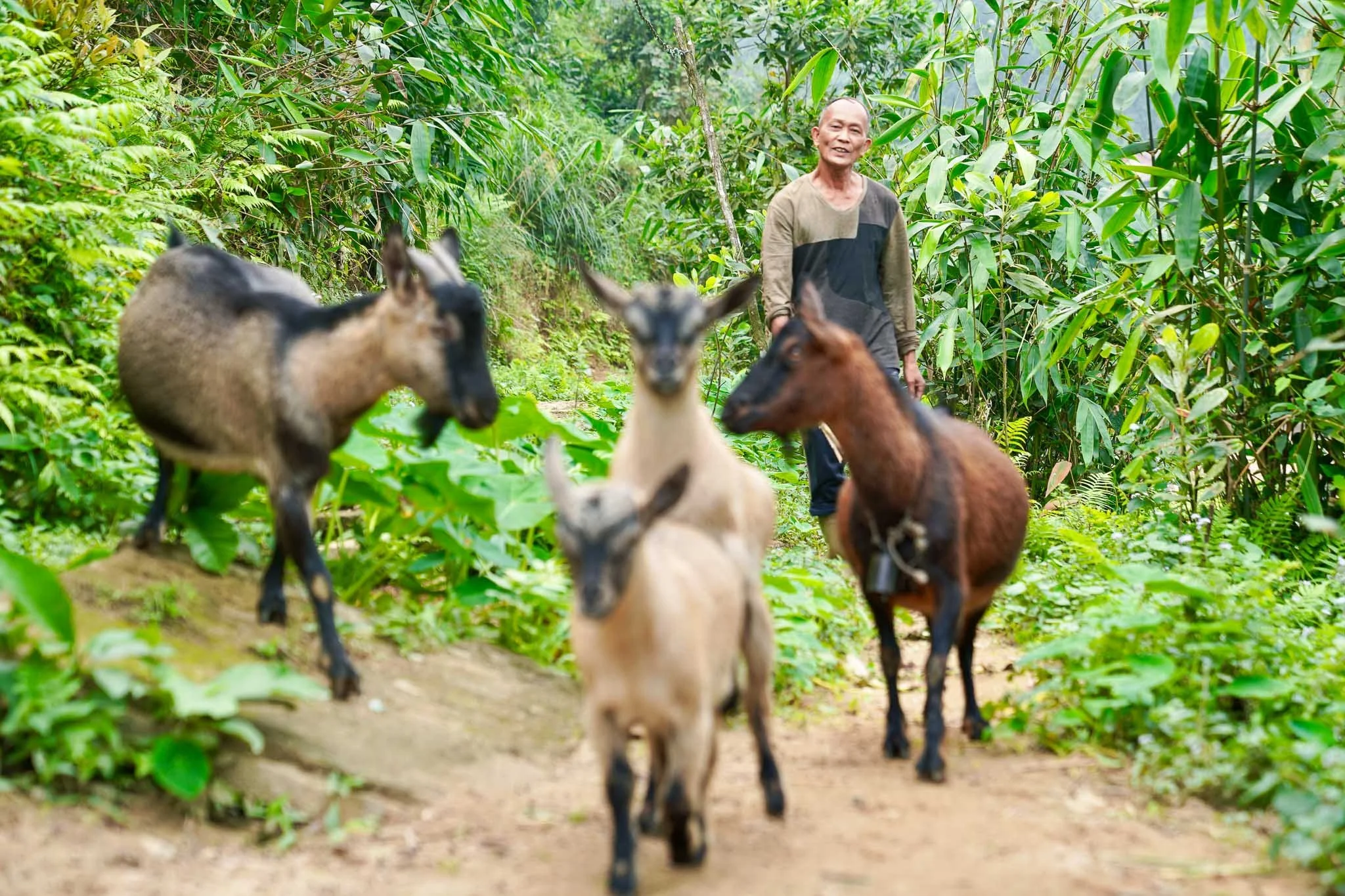
Through Plan International’s AHP response to consecutive Typhoons in northern Viet Nam, Mr Phấu received a 5 million VND livelihood support package. IMAGE: Plan International Viet Nam
In the remote highlands of Tuyên Quang province in northern Viet Nam, the impact of two consecutive tropical cyclones that hit in late September 2025, is still evident. Known locally as Typhoon No. 10, Bualoi, and Typhoon No. 11, Matmo, the storms brought days of heavy rain that triggered floods and landslides across already vulnerable communities. Hillside plots of maize and rice were severely damaged. As always in disasters, the back to back typhoons heavily impacted people already facing poverty the hardest.
Across villages in Tân Quang and Xín Mần communes, many households depend subsistence farming, and a single rice or maize crop and a small number of farm animals are all that is used to sustain a family. During Typhoons Bualoi and Matmo fields were swept away, homes were damaged, water sources were contaminated, and access roads became unsafe or impassable. Older people, people with disabilities and families with young children were among those most exposed. In some places, the cyclones turned ordinary hardship into an emergency within hours.
Through DFAT’s Australian Humanitarian Partnership, Plan International Viet Nam worked alongside local partner Centre for Research on Initiatives of Community (RIC), commune authorities and village leaders to support households hit hardest by the disaster. The response combined Australian Government humanitarian funding with Plan’s community-based approach and the local knowledge of partners who understood which families were most at risk. Together, they helped people meet urgent needs and begin rebuilding livelihoods in practical, locally appropriate ways.
For Triệu Vàn Phấu, a 56-year-old Dao man from Tân Lập village in Tân Quang commune, the storms arrived at a home already standing on the edge of insecurity. Mr. Phấu is the main breadwinner for his family. His wife lives with an intellectual disability, and their two children are still young: one in Grade 6 and the other in kindergarten. Before the storms, the family survived by growing bananas, collecting giang leaves and taking occasional manual work around the village.
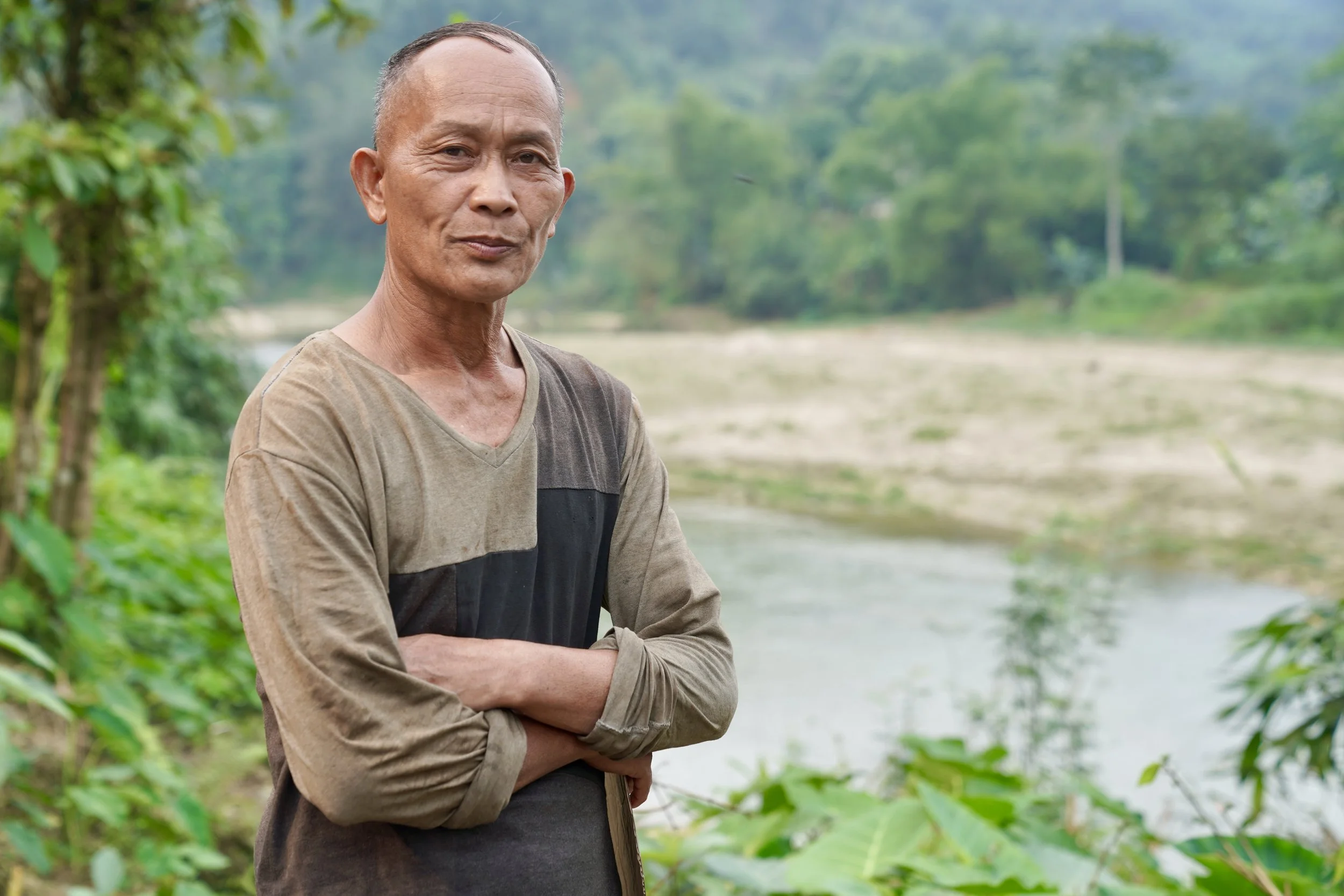
“Our life is still very hard, but now that we have goats to raise, we still have hope,” Mr. Phấu said. IMAGE: Plan International Viet Nam
Their house sits near a stream, separated from neighbouring homes. To reach it, people must cross water or pass along a narrow path behind another family’s garden. When days of rain caused the land to collapse, part of the family’s plot was swept away. The banana and giang trees they relied on were destroyed, and nearly three metres of land disappeared, making the path to the house even more dangerous. As floodwaters rose in the dark, village youth paddled a boat through the water to warn residents, while local groups carried food to isolated households. “At that moment, we were so relieved. It was already dark, but people still came looking for us,” Mr. Phấu recalled.
Through the AHP-funded response, Mr Phấu received a 5 million VND livelihood support package. He used most of it to buy three goats and added what little money the family had left to buy about ten chickens. For him, the livestock represented more than an asset. They were a way to restart after losing the land and crops that had helped sustain his family. Each afternoon, he brings the goats home from the hillsides, hoping they will breed and eventually provide income. “Our life is still very hard, but now that we have goats to raise, we still have hope,” he said.
In Xín Mần commune, the cyclones had a different but equally devastating impact on 69-year-old Sùng Chẩn Mìn and his wife. Mr Mìn, a H’Mông man, lost one of his legs after stepping on a landmine many years ago, making movement and heavy labour extremely difficult. The couple depended on a small rice field, a maize plot and a few animals. In an ordinary year, their maize harvest could reach around 50 sacks, enough to help two elderly people get through the year.
After Typhoons Bualoi and Matmo, prolonged rainfall triggered landslides that destroyed nearly 800 square metres of the family’s farmland. Their rice and maize crops were completely wiped out. “We only depended on that much for the whole year, and then the rain came and washed it all away,” Mr Mìn said. Without food reserves and with no other reliable income, the loss left the couple facing months of uncertainty.
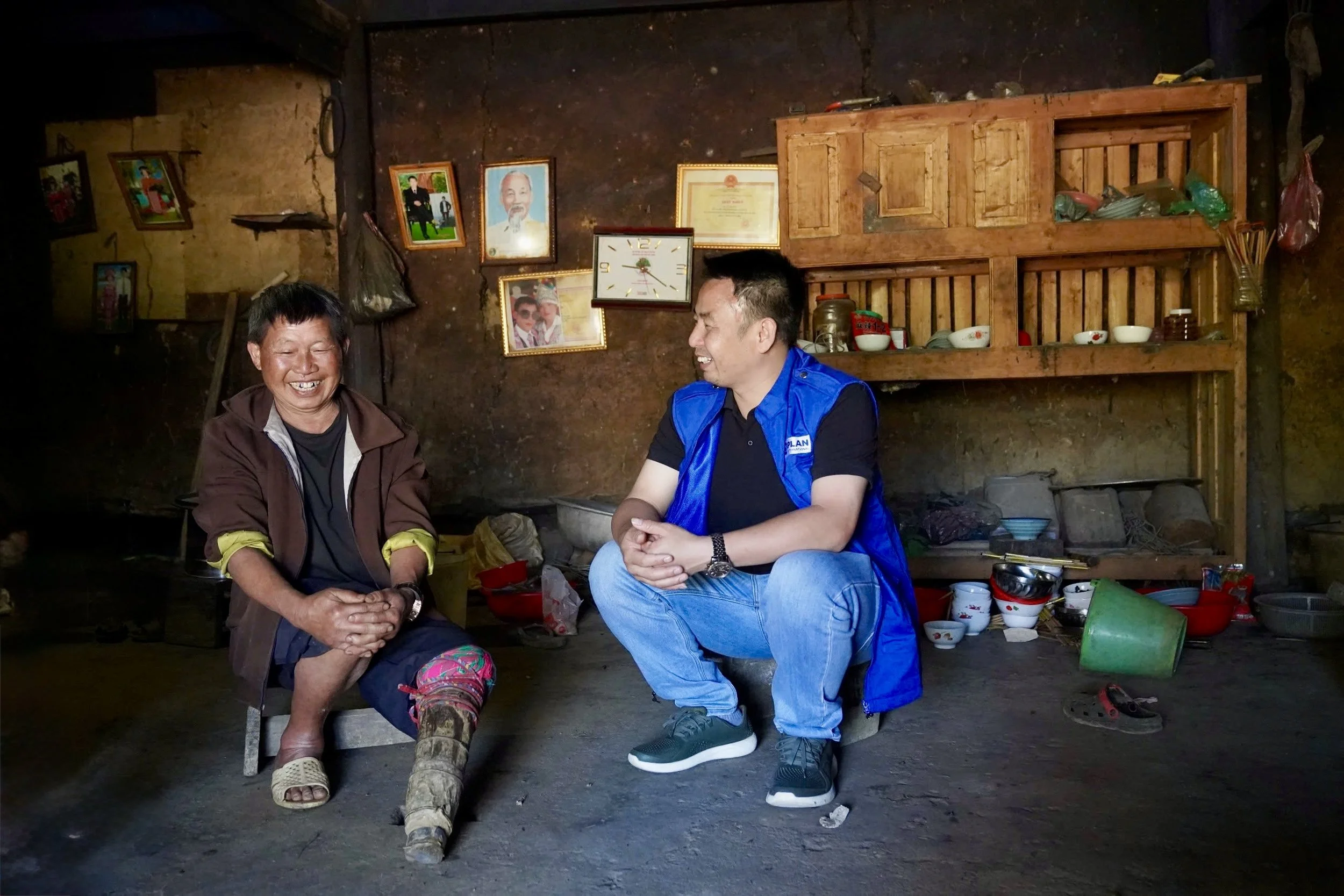
Mr Mìn, who lost his leg after stepping on a landmine many years ago, lost his maize harvest when the Typhoons hit. He received support through Plan International and has begun raising livestock for income. IMAGE: Plan International
The support package he received through Plan International’s AHP response gave him a chance to rebuild an income for he and his wife. Mr. Mìn bought a breeding pig weighing more than 60 kilograms and used the remaining funds for animal feed and fertiliser. Later, the pig gave birth to four healthy piglets. “When I saw the pig give birth to those piglets, I was so happy. Once you still have livestock to raise, you still have something to hold onto,” he said.
Rather than selling pigs as he had done before, Mr. Mìn decided to raise breeding pigs and sell piglets, which can bring a better price. This choice turns one package of assistance into the beginning of a livelihood cycle. It does not erase the loss of his fields, but it gives the family a way to keep working toward stability. “Now that we have something to raise again, we worry a little less. As long as we can still work, we can still live,” he said.
Higher in the mountains, in Ngai La Thau village, 70-year-old Cho Thi Che lives with her 90-year-old mother. Reaching their home requires a steep climb along a narrow mountain trail. The two Hmong women are among the most vulnerable households in the village, but despite their age, they continue farming because it is their main way to survive.
Each year, Ms. Che planted around five kilograms of rice seed, hoping the harvest will feed both women through the year. But the consecutive storms destroyed nearly the entire crop. Heavy rain also made water unsafe. “Up here, the floods don’t reach us, but landslides happen. And when heavy rain comes, the water flowing down from the mountain is dirty — we can’t drink it,” she said.
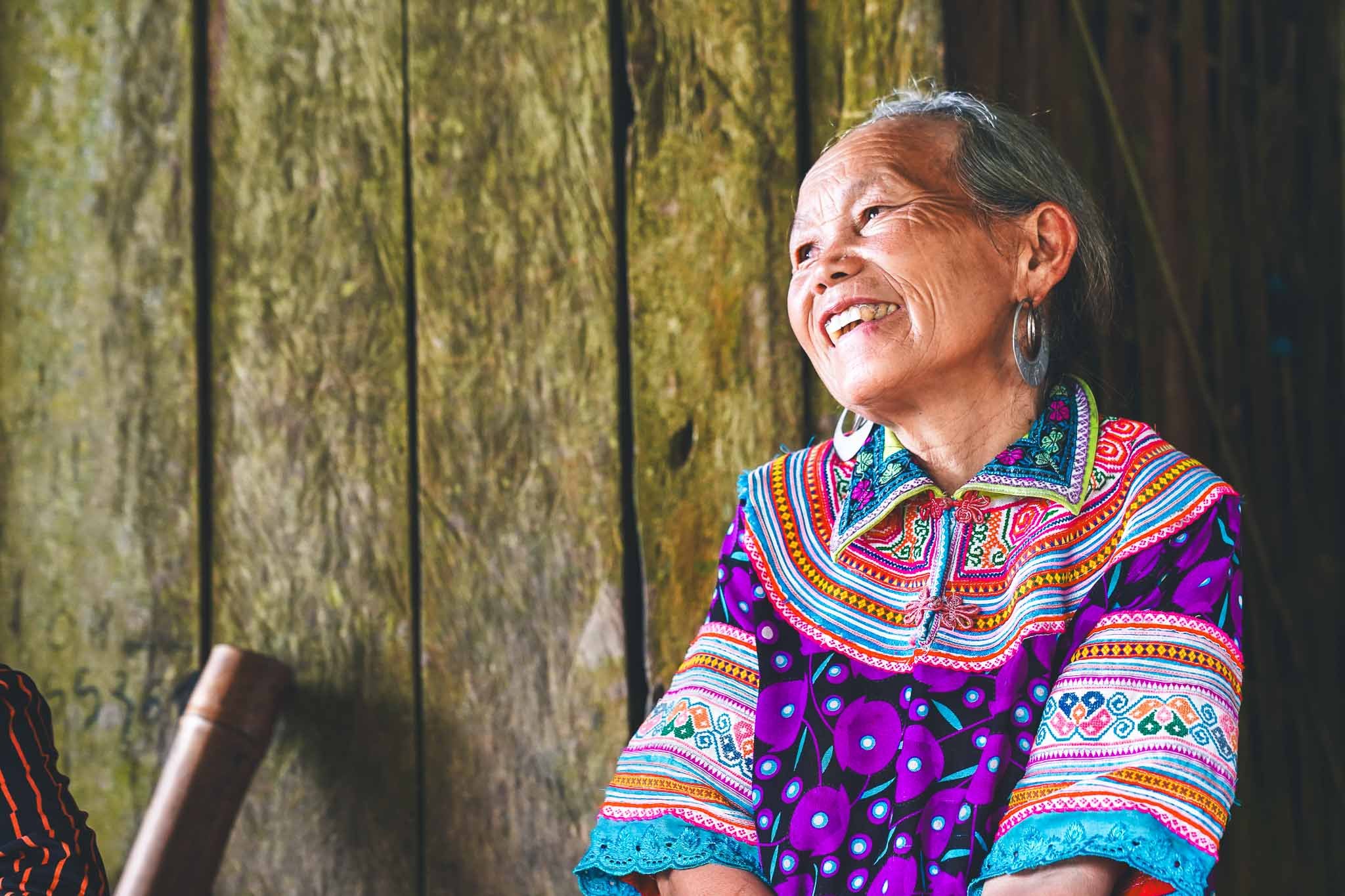
Ms Che (70) lives with her mother (90) and received a water filter, hygiene kits, a 5 million VND livelihood support package and an additional 2.4 million VND cash package for small households. IMAGE: Plan International Viet Nam
For Ms. Che and her mother, the AHP response addressed both immediate and longer-term needs. They received a water filter, hygiene kits, a 5 million VND livelihood support package and an additional 2.4 million VND cash package for small households. Plan International Vietnam staff and village officials climbed to the house to help install the water filter and show Ms. Che how to use it. When clean water began flowing through the filter, one of the storm’s daily worries became easier to manage.
Ms. Che chose to combine almost all of the cash and livelihood support to buy three pigs for around 7 million VND, using the small amount remaining for rice seed and fertiliser. She plans to raise the pigs for about a year before selling them, hoping the income will be enough money to repair parts of the house, strengthen the porch, and make the floor safer for her ageing mother. “As long as I still have strength, I will keep going,” she said.
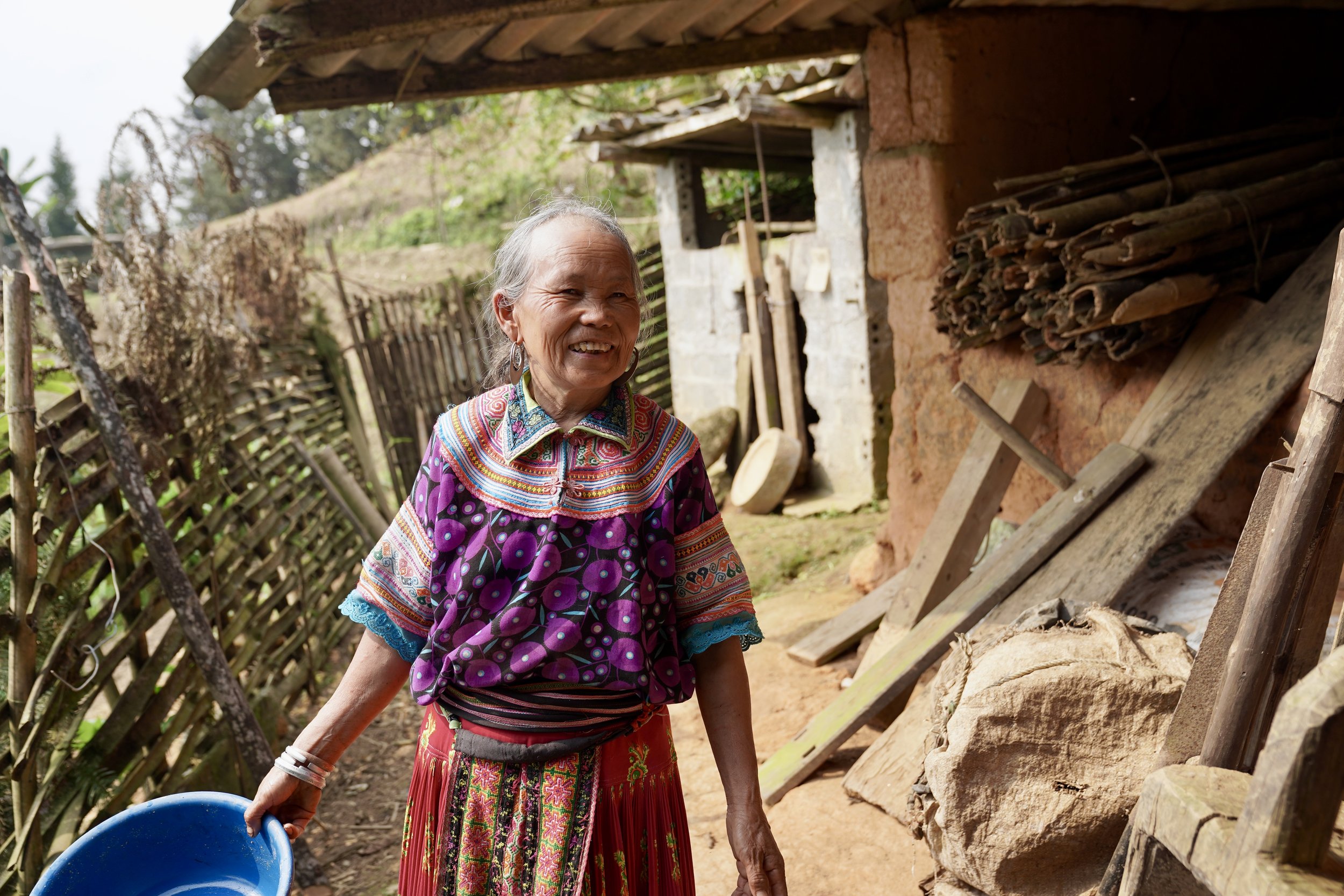
“As long as I have strength I will keep going,” a determined Ms. Che said. IMAGE: Plan International Viet Nam
The experiences of Mr Phấu, Mr Mìn and Ms Che show how the cyclones affected communities in different but connected ways. For some families, the storms washed away crops and food reserves. For others, landslides threatened homes, damaged access routes or polluted water sources. Across the affected villages, people who already had few resources were left with fewer options, and recovery required more than a single form of assistance.
That is why the partnership behind the response mattered. Australian Government support through DFAT’s Australian Humanitarian Partnership enabled Plan International Viet Nam and RIC to work quickly with commune authorities, village leaders, youth volunteers and community members who knew which households were most vulnerable and what support would make the greatest difference. Together, they delivered assistance that met immediate needs while helping families restart livelihoods in ways they understood and could sustain.
While the response could not restore lost land or remove the risk of future storms, it has helped return agency and autonomy to families whose options had been sharply reduced. A water filter meant safer drinking water. Hygiene kits helped protect health. Cash and livelihood support enabled households to choose the recovery pathway that made sense for them.