

Early warning systems will save lives
By Serviano A. Cardoso, Plan International, Timor Leste
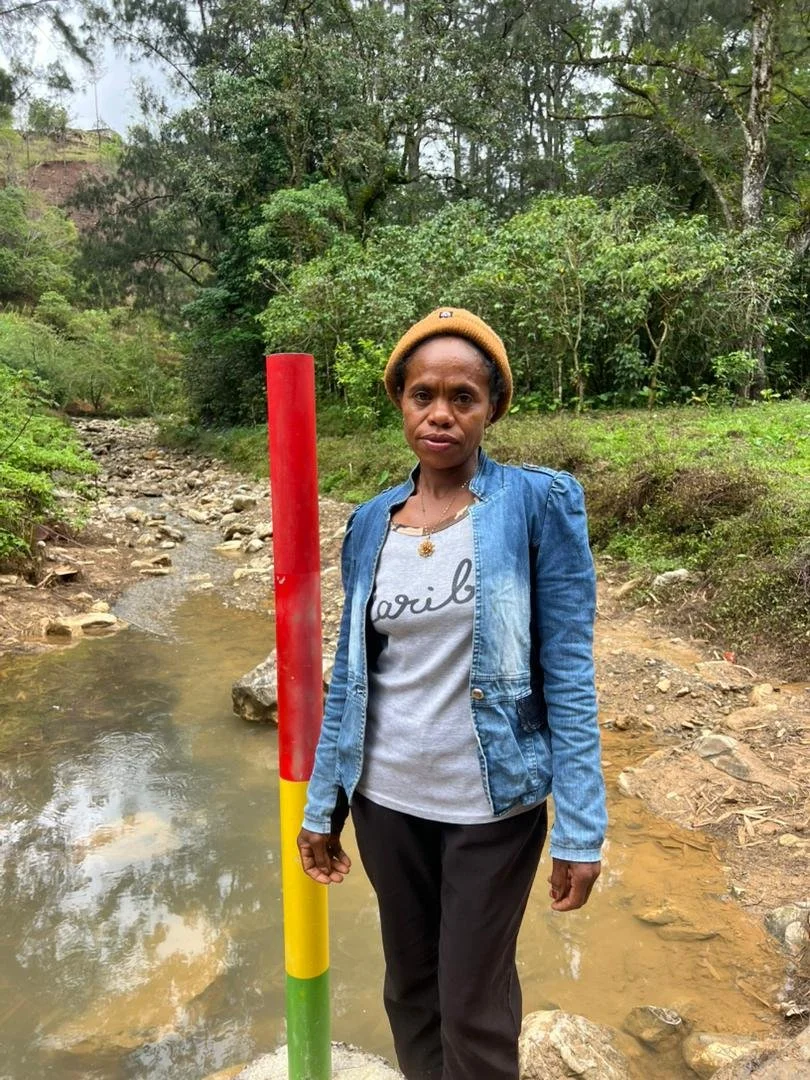
“With the installation of the early warning system and construction of the bridge, we now feel safer. We can teach our children to be mindful of the colored signs that have been placed in the river.” Francisca said. IMAGE: Serviano A. Cardoso/Plan International in Timor Leste
Francisca’s community, Edi, is about 70km south of Dili, in the central highlands of Timor-Leste. Coffee farming and horticulture is a major source of income for her community, along with maize and root crops. Edi has been known for geo-tourism development due to its geological features and scenic landscapes. Studies highlight its potential for educational tourism focused on geology and environmental conservation, which could boost local income and infrastructure. But Francisca and others in Edi continually face flooding, which disrupts daily activities during the rainy season, especially for children who must cross the river to get to school. In addition, Francisca and her family had limited access to information about the early warning system for heavy rain and floods. Through the Disaster READY project implemented by MAHARU partners in collaboration with the Suco Disaster Management Committee, Francisca participated in activities that identified potential disaster risks and climate change hazards, as helped to develop strategies that would prevent or mitigate these risks.
One of the most impactful of these activities is the development and installation of the Early Warning System, supported by Plan International and its partner MAHARU. The Flood Marker post was installed on a bridge over the river to make it easier for community members, especially students, to cross the river safely when flooding occurs.
“I am very happy and grateful to Plan International and MAHARU because through the Disaster READY project helped our community to install an early warning system and build a bridge over the river.” Francisca said. “Our community and students usually pass by the river on their way to activities, with the installation of the early warning system and construction of the bridge, we now feel safer. We can teach our children to be mindful of the colored signs that have been placed in the river. I hope that Plan International and MAHARU will continue to work with us to share information related to disaster preparedness and climate change to become more resilient in the future.” when disasters occur. Moreover, we are very grateful to the Australian government through AHP for funding the disaster ready activities in Timor Leste, especially in Suco Edi, Lobibo Sub-Village which has greatly helped improve our knowledge on disaster resilience and climate change adaptation. We hope that this activity will continue in the future and help the community to be better prepared to face disasters.”