

Planting seeds for GBV survivors to have a brighter future
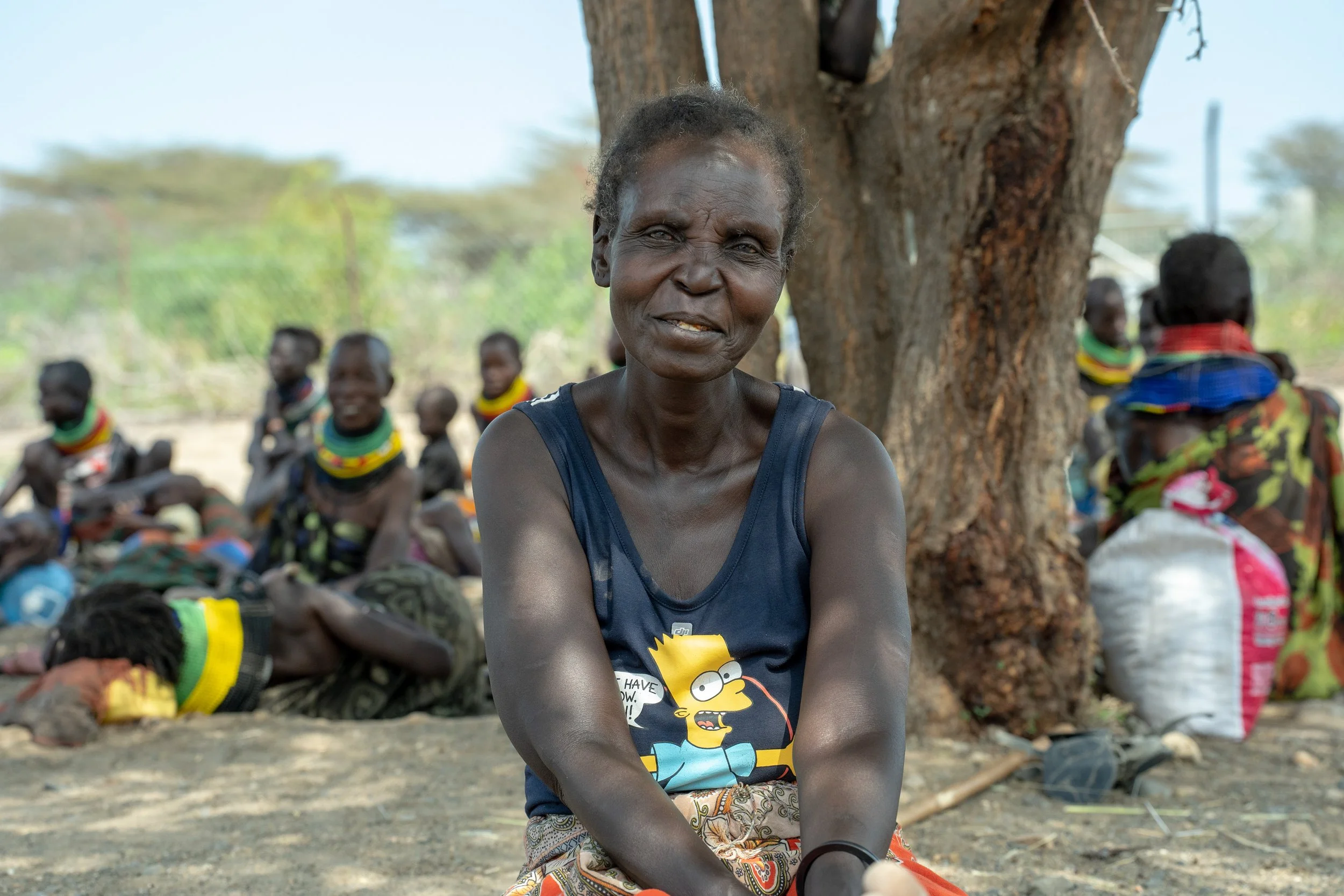
Above: Elizabeth Poosi, resident of Kaloyara community. Photo: Oxfam Kenya
Forty-five-year-old Elizabeth Poosi has called the vast Kaloyara village in Kenya home her entire life. She is a farmer and small business owner who relies on her son and his motorbike to get her supplies from the nearby town of Nachukui.
Elizabeth had been farming watermelon since 2022. She used the proceeds from this to pay school fees for her children. Although this responsibility is often taken on by the men, Elizabeth has been a widow for a few years, and unfortunately, the livestock her husband left behind were taken by her in-laws. They also assaulted her.
The financial abuse she suffered from her relatives meant that by the time the drought came, she was at a severe disadvantage. Not only was she supporting her family on her own, but she also had no choice but to provide for the people her husband had employed to take care of the flock. This drained her and the little money she had saved from her business. Worsening this situation, her farm suffered intensive attacks from insects that were brought by the drought. They were attracted to the sap in her watermelon making it difficult to protect her crop for harvest.
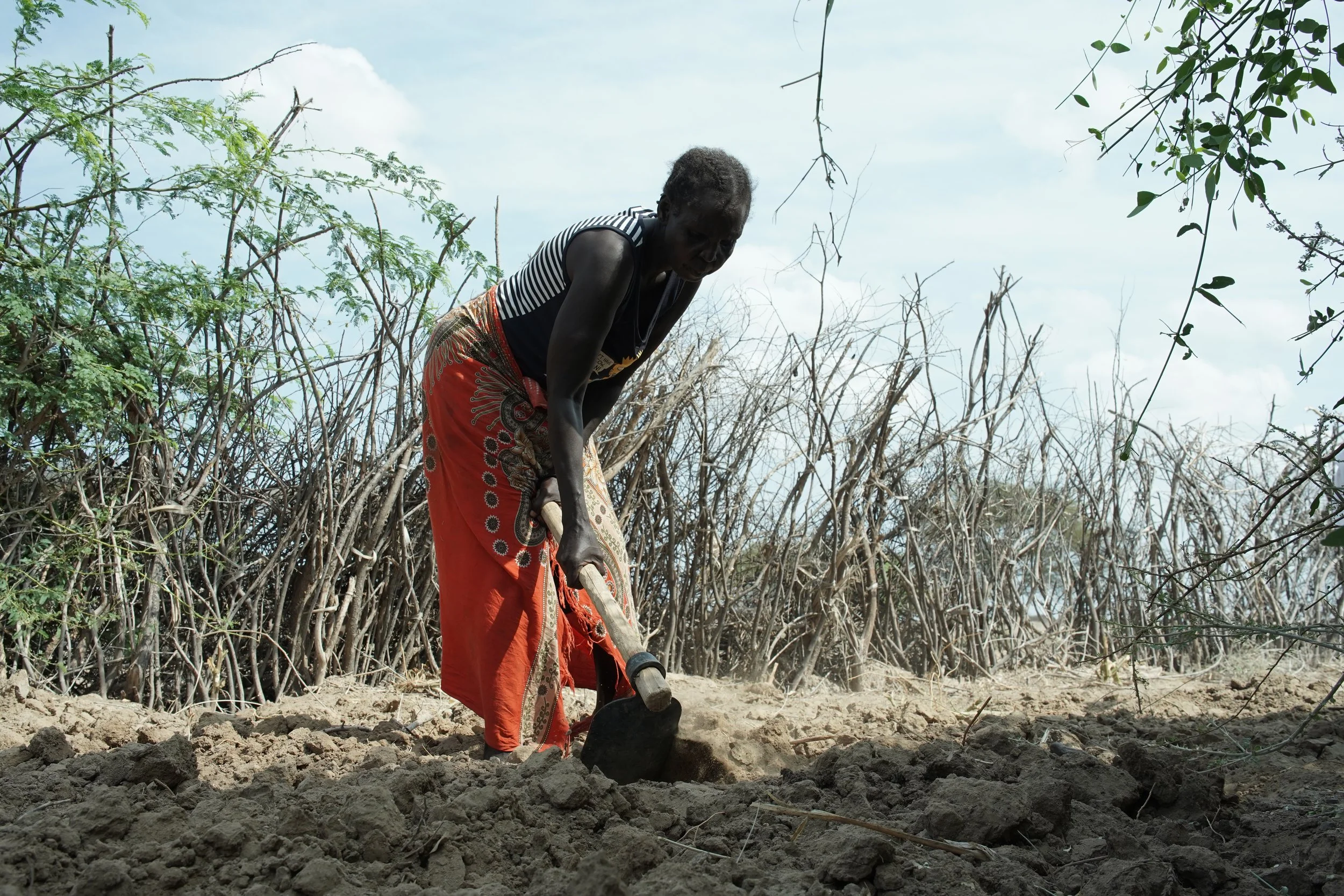
Above: Elizabeth tilling her garden in Kaloyara. Photo: Oxfam Kenya
“The aphids and grasshoppers nearly finished everything I had planted. I was lucky enough not to have water issues due to the pipe extension that brought water directly to my farm,” Elizabeth said.
Elizbeth is a member of the Kikeunae self-help group in Kaloyara. The group is made of women of all ages who are GBV survivors. Her group was selected to receive training and farm inputs from Oxfam and local partner TUPADO through the Australian Humanitarian Partnership drought response in Kenya.
With new knowledge, better farm tools, and more determination, Elizabeth decided to restart her farm and plant nutritious vegetables. The income from her crop contributes significantly to the increased quality of life she now lives with her children and grandchildren. She sells her produce to distributors going to and from Lodwar and other bigger towns, which enables her to provide for her dependents, including any medication they need.
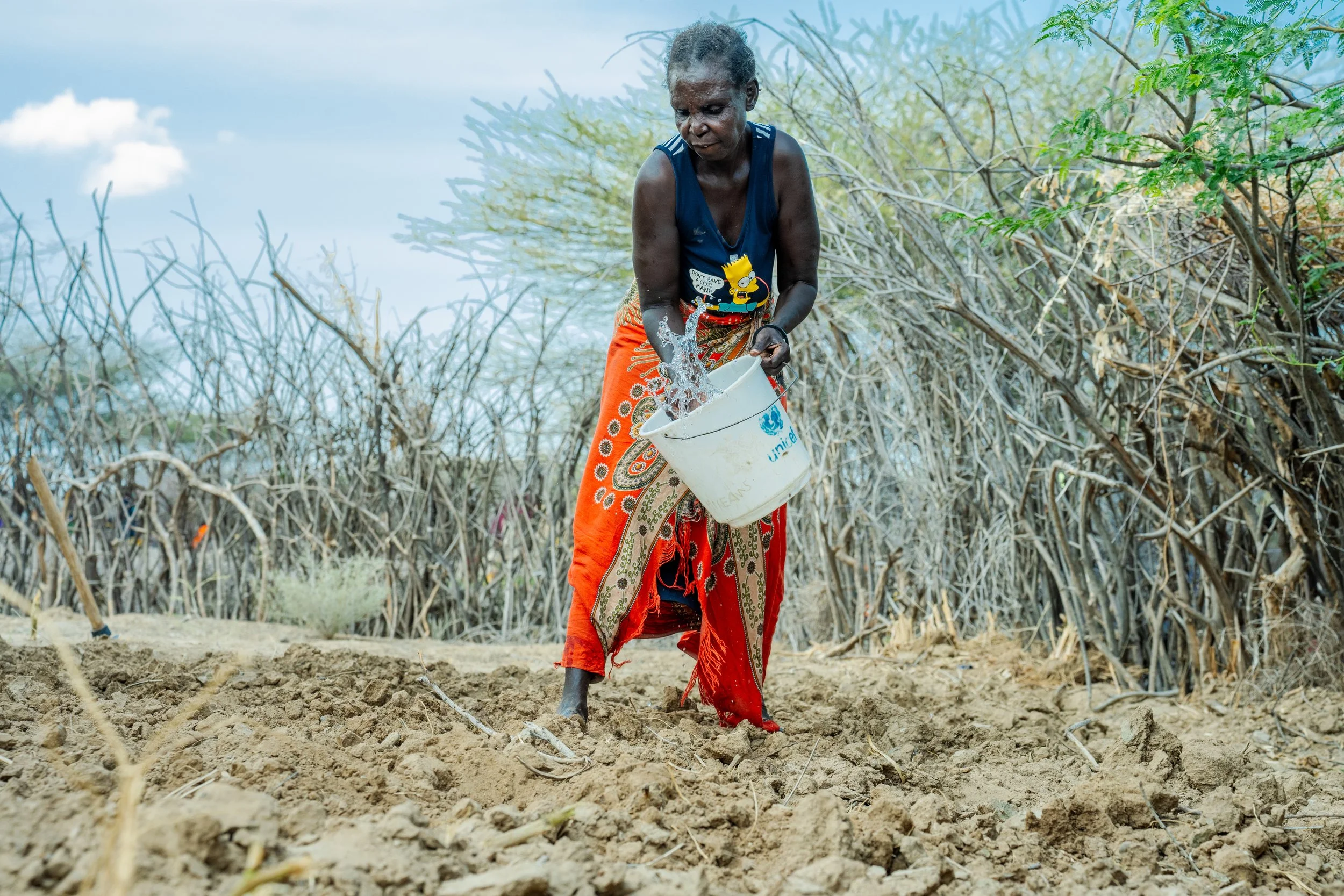
Above: Elizabeth Poosi watering her garden in Kaloyara. Photo: Oxfam Kenya
‘’I feel more secure in case of another drought. I am not relying on livestock anymore, I am relying on my vegetable farm now, especially because I have water nearby,” Elizabeth adds.
Through the Australian Government funded project, she has also been taught about her rights as a woman and widow. She now knows what steps to take in case of any form of aggression from her in-laws, and she is now empowered to report any cases of violence in her community. The younger women in her group are also more comfortable going about their day-to-day activities; they are not ashamed anymore.
Living in a predominantly male-dominated community, Elizabeth is grateful to have a voice, to be a mentor to younger women, and to have a stable source of income through her garden. ‘
’My in-laws do not harass me anymore because they know I am empowered and I even reported them. They no longer disturb me and now I can focus on my farm,” Elizabeth said.