

Recovering from a string of cyclones: how AHP support helped Filipinos get back on their feet
In October-November 2024, the Philippines endured a wave of destruction as the country was hit by six cyclones within the period of 30 days, with some occurring simultaneously. The Australian Government supported an activation of the Australian Humanitarian Partnership for early recovery activities in the regions most affected by the cyclones.
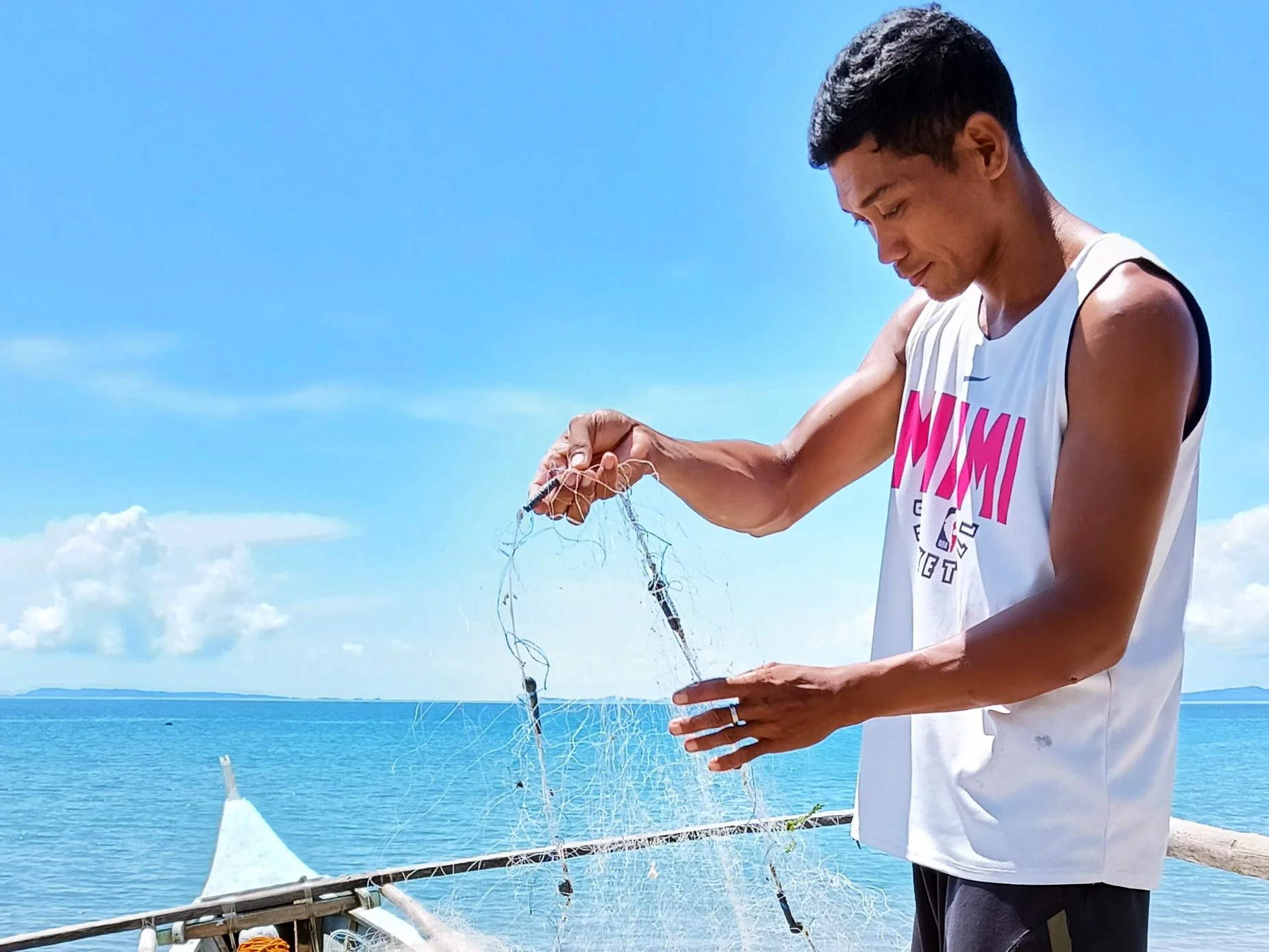
Above: Larry at sea. Multipurpose cash assistance after a string of cyclones has helped restore his livelihood. Photo: Oxfam Pilipinas
Larry’s story: improving fishing livelihoods
In a coastal village in Sorsogon, the Philippines, Larry Fuentes works as a fisher to raise his three children as a solo parent.
Larry’s life changed when his wife, Maureen, died giving birth to their youngest daughter. Since then, he has taken on the responsibility of raising their children with the help of his elderly parents, with whom he now lives. Together, they support each other through life’s daily challenges.
Without his own fishing gear, Larry struggled to make ends meet. He relied on small fishing trips and odd jobs to feed his children and keep them in school. His monthly income averaged around 700 Philippine pesos (AUD 17.50), barely enough to cover basic needs.
Worse, when the multiple cyclones struck the Bicol region in October and November 2024, Larry’s family had to evacuate to a neighbor’s house, which was safer and more stable than their own. Even after the cyclones passed, weather disturbances would still create dangerous waves. They damaged his fishing gear and boat.
Things changed for the better when Larry was selected as a participant for multipurpose cash assistance and top-up support provided by the Australian Government through the Australian Humanitarian Partnership, in partnership with Coastal CORE and Oxfam Pilipinas.
Larry said the timing was crucial because he was still coping with the loss of income from the multiple weather disturbances.
Using the cash assistance, he was able to buy his own fishing gear. With the proper tools, he now goes out to sea more often and catches more fish. His income has nearly tripled to about Php 2,000 per month (AUD 50).
Larry also shares his equipment with other struggling fisherfolk in the community. He believes the support he received should also benefit others.
"I thank God that I was one of the chosen recipients, and I’m also grateful to all of you who became the channel through which this valuable assistance reached our family and our community," Larry said.
Larry ‘s story reflects the impact of targeted aid and how community solidarity can help families recover and move forward after tragedy and disaster.
Loreta’s story: supporting women volunteers to play their vital community role
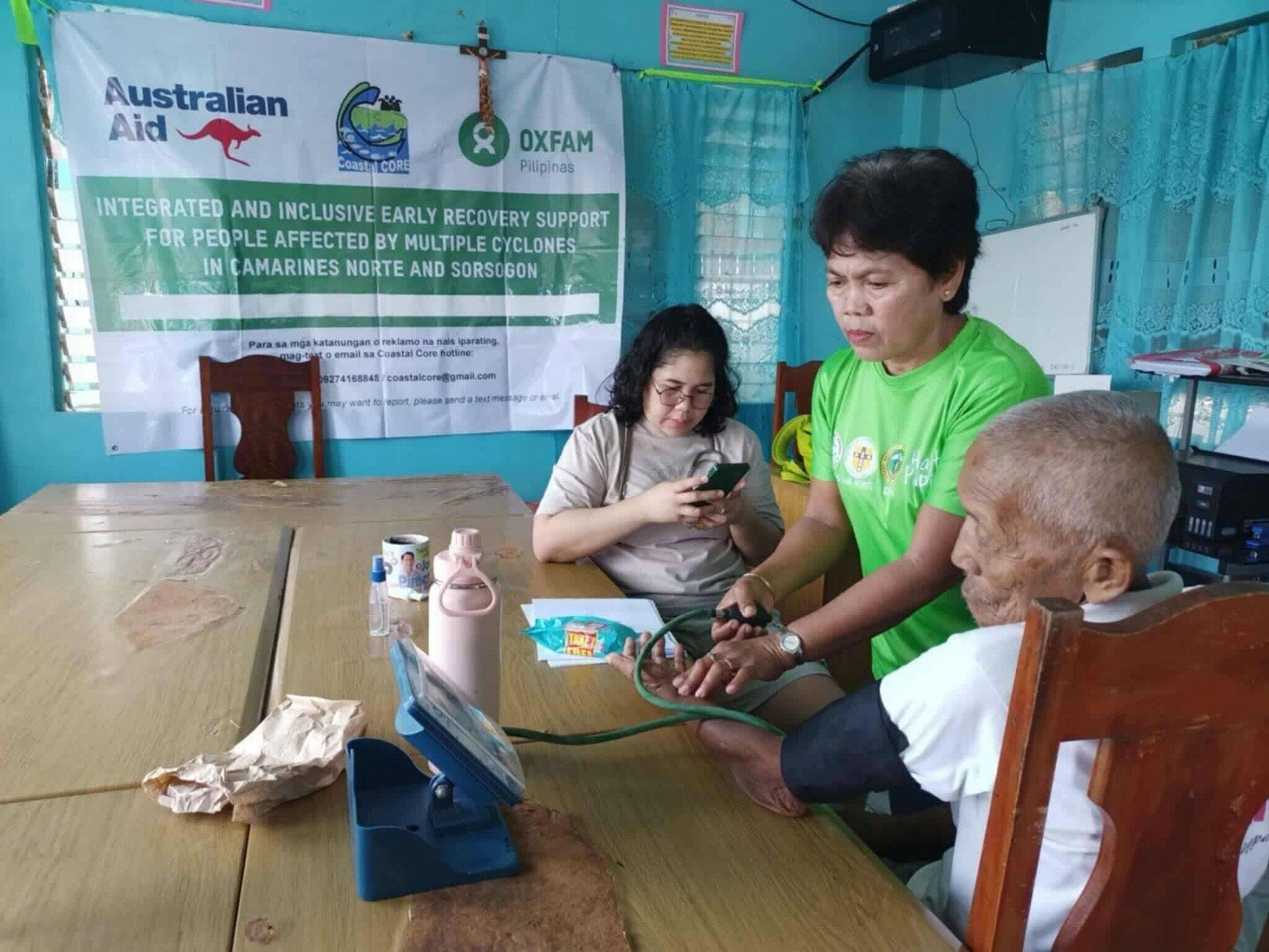
Above: Loreta assists in assessing persons with disabilities to determine their need for a mobility assistive device. As part of the initial evaluation, she checks their blood pressure before the physical therapist conducts a full assessment. Photo: Oxfam Pilipinas
Loreta Pagano tirelessly serves her local community as a barangay (local administrative area) health nutritionist. She has been serving the community for over 20 years, occasionally taking on sideline work as a manicurist to supplement her income.
Part of her role also involves assisting families so they can evacuate safely and ensuring that vulnerable evacuees are taken care of while inside the evacuation centers. While selflessly serving others, volunteers like Loreta also must split their attention with their own families who are also affected by the disaster. This is also means they are unable to devote time to their alternative income sources.
Loreta is one of the community volunteers who received cash assistance designed to support women engaged in volunteer care work as part of the Australian Humanitarian Partnership response to the 2024 cyclones, funded by the Australian Government and implemented by Coastal CORE and Oxfam Pilipinas.
Angilyn, Maria and Gina’s story: restoring WASH for cyclone-impacted communities
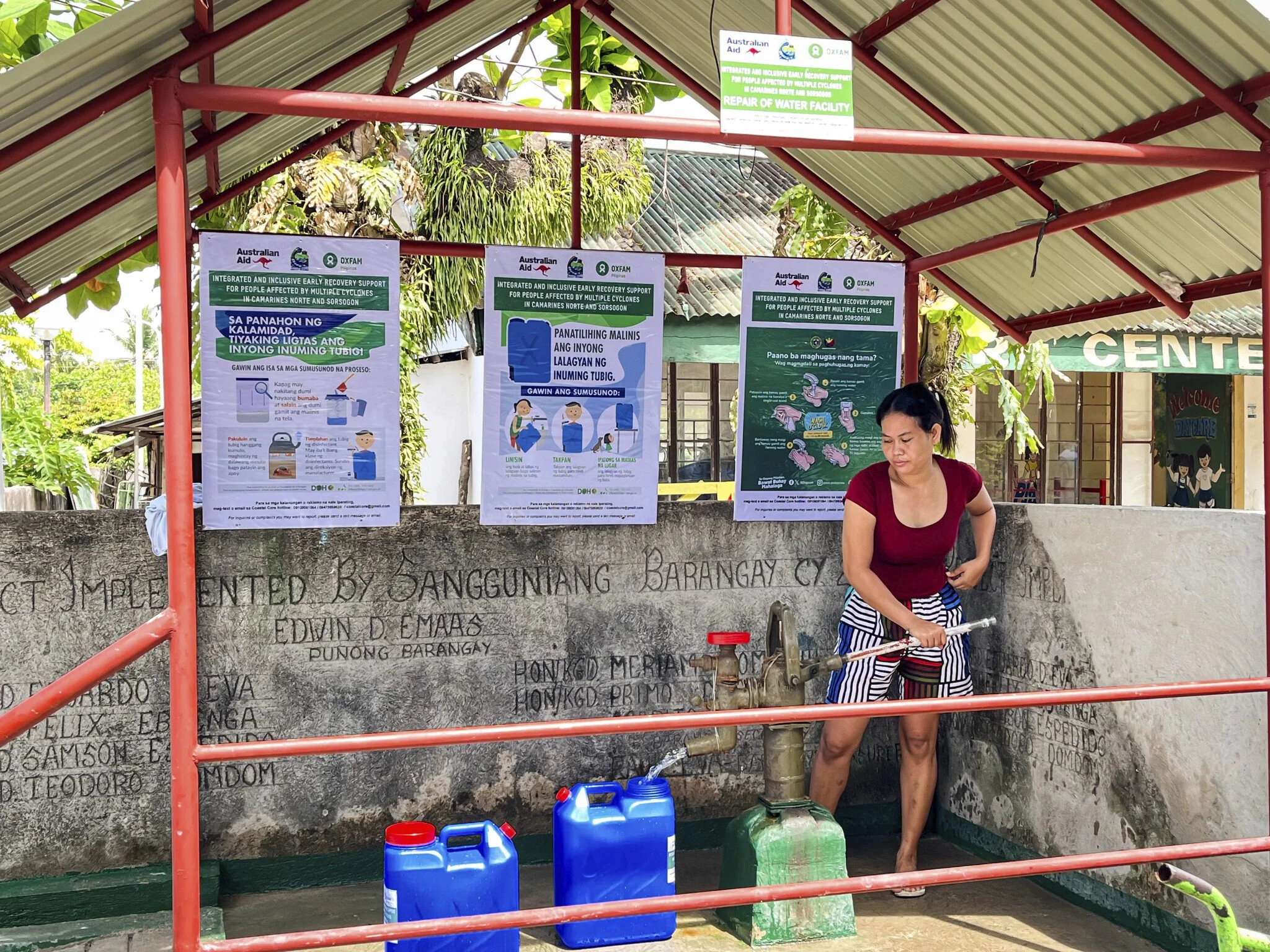
Above: Angilyn Domdom collects water from the new pump. Photo: Oxfam Pilipinas
Angilyn Domdom, a child development worker from Barangay Diamante in Prieto Diaz, Sorsogon, collects potable drinking water using a water pump provided to the community through the Australian Humanitarian Partnership response to the 2024 cyclones, implemented by Coastal CORE and Oxfam Pilipinas.
When multiple cyclones caused widespread flooding in their area, their old water source was contaminated by floodwater. Even after the floods receded, they refused to drink from it as the water had noticeably changed taste. This made them uncomfortable.
"We are thankful because now it is easier to get clean water here in our village. Back then, we had to buy drinking water but because of the assistance we can now get it for free, which reduces our family expenses,” Angilyn said.
Ensuring the new water pump improves hygiene in the community also involves the support of volunteers and WASH (Water, Sanitation and Hygiene) committee members.
Maria Cristina Bayle shares her commitment to promoting cleanliness and health-related activities in her community as a member of the barangay WASH Committee and as a barangay nutrition scholar (BNS).
As part of her responsibilities, she regularly leads hygiene promotion campaigns across the entire barangay, coordinating with the rest of the WASH team. During times of crisis, she helps in preparing families to evacuate and monitors their health and welfare while inside evacuation centers.
“As a member of the WASH Committee, I know I will have a big contribution to the community in promoting cleanliness and health-related activities. This is my only job, so I can dedicate time and attention to it,” Maria said.
Gina Celorica, a barangay health worker and WASH committee member, assists other barangay officials in installing informational signage next to the water pump. The sign reads “Safe to drink; do not take a bath or shower here.”
Gina says that placing informational and educational materials next to WASH facilities helps ensure people are informed about the proper ways to keep the water facility and containers clean. She also said that more people are now collecting safe drinking water from the pump after knowing that the water has been tested safe for drinking.