

By Armandina Maria Amaral, World Vision, Timor-Leste
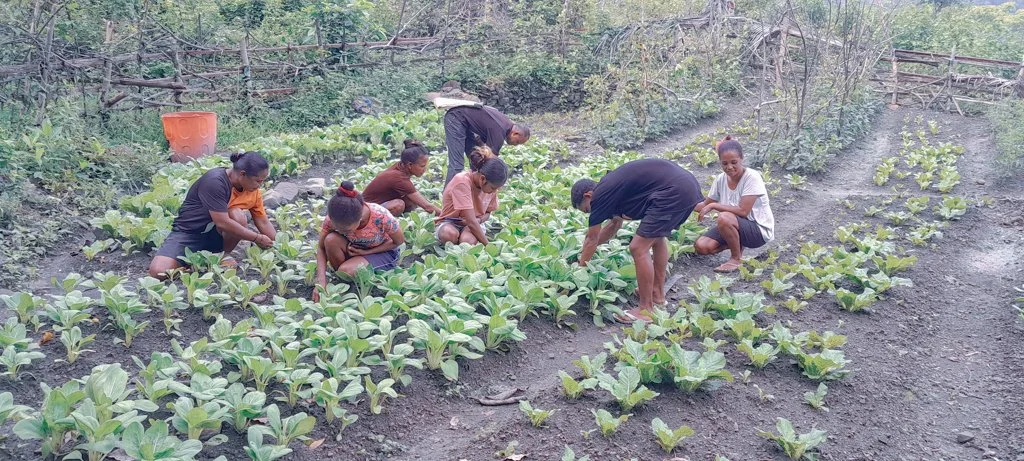
According to the 2019 Agricultural Census, 66% of households in Timor-Leste depend on agriculture for their livelihoods. In Bobonaro municipality, many families grow staple crops such as maize, black beans, red beans, mung beans, cassava, and taro. However, during the dry season, large areas of farmland are often abandoned due to water shortages and a lack of technical skills to maintain production. Consequently, many communities must rely on purchasing agricultural products from neighbouring villages to resell for income.
To address these challenges, the Disaster READY program in Bobonaro helped establish nine agriculture groups to support communities in practicing horticulture (vegetable farming), even during the dry season. One of these groups is Aisalgusul, led by Guilermina and consisting of 15 members (10 women and 5 men).
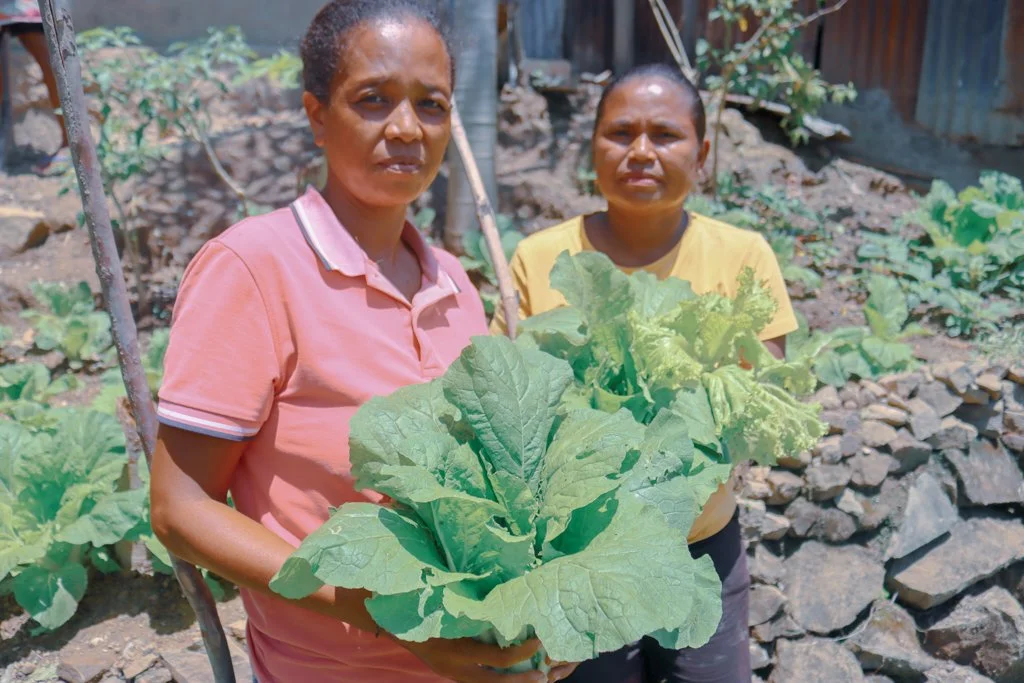
ABOVE: Through support from Disaster READY, the Aisalgusul group received horticulture training facilitated by World Vision Timor-Leste. IMAGE: Armandina Amaral/World Vision Timor-Leste
Before joining the program, community members farmed independently but lacked essential skills in land management, fertiliser use, water management, and planting calendars. They also had no experience in preparing business plans or managing group savings.
Through the Disaster READY project, the Aisalgusul group received horticulture training facilitated by World Vision Timor-Leste, with technical support and monitoring from local partner HADEER. The training strengthened their skills in soil management, organic fertilizer production, efficient water use, crop selection based on seasonal conditions, and financial management.
“Before, we didn’t practice horticulture, but now we know how to build garden beds, make organic fertilizer, and plant vegetables using the right seasonal techniques,” Guilermina shared. “We harvested vegetables and sold them, earning $200 USD. We decided to reinvest this income into a new business raising local ducks because the market price is good and ducks are resilient to disease.”
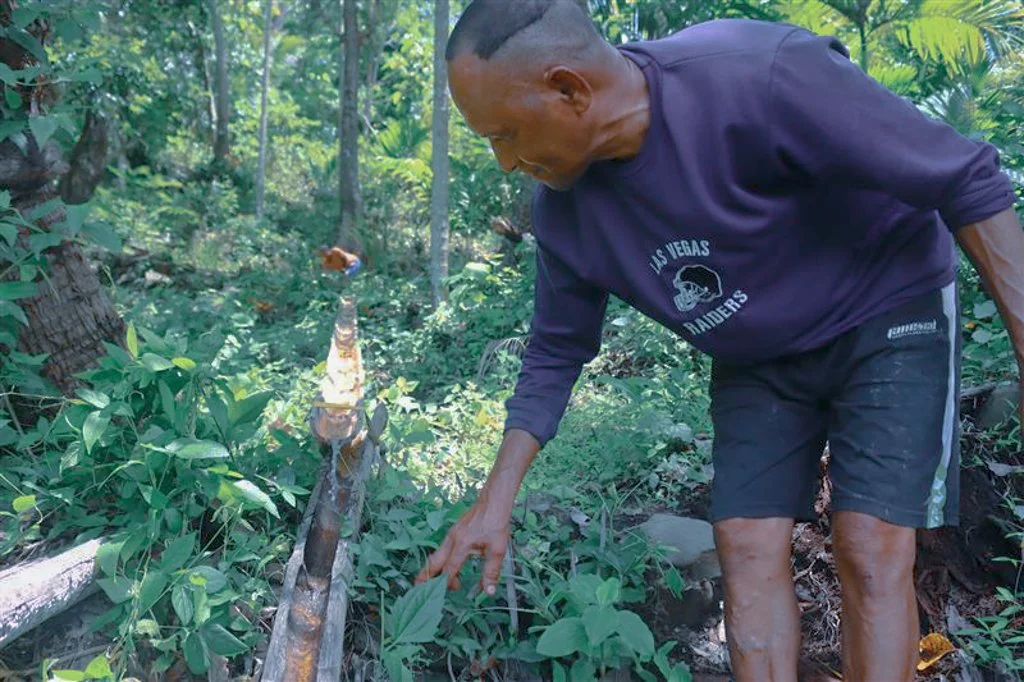
ABOVE: Community members learned how to direct water from springs to garden beds using local materials. IMAGE: Armandina Amaral/World Vision Timor-Leste
Domingos, a Disaster READY facilitator from World Vision, added: “The group learned how to use local materials to direct water from distant springs to their garden beds, allowing them to keep planting during the dry season. This training has had a significant impact; the Aisalgusul group earned $200 USD from land that was previously abandoned.”
With support from the Australian Government and the Australian Humanitarian Partnership (AHP), the Aisalgusul group has successfully diversified its income. To date, the project has benefited 383 community members from 27 groups across Bobonaro municipality, generating a total income of $3,420 USD this year. This support has helped groups strengthen their economic resilience, diversify their livelihoods, and build hope for a sustainable future.