

Working towards a brighter future while improving the camps of Cox’s Bazar
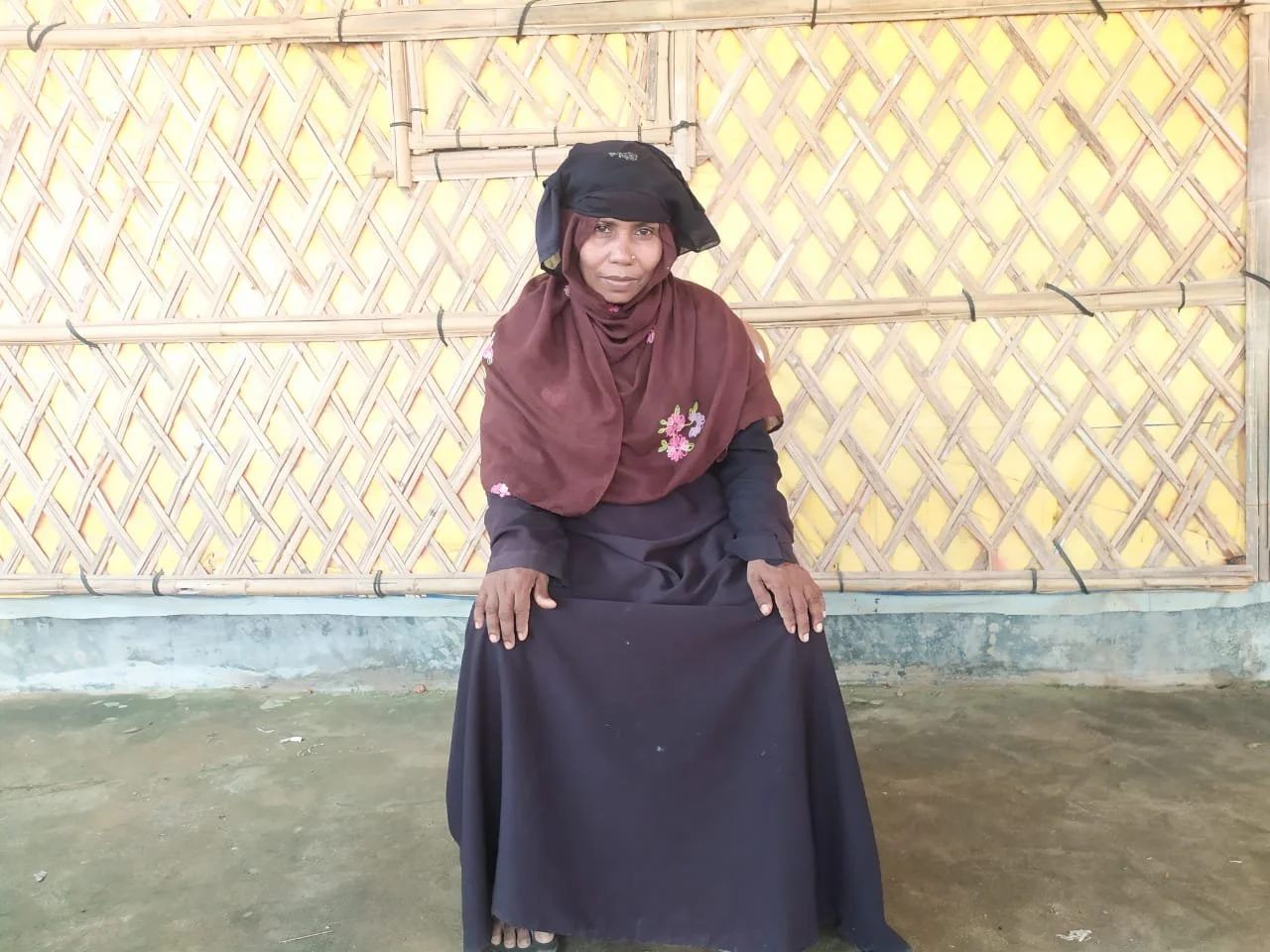
Above: Laila outside her home. Photo: Hasanur Rahman/CARE Bangladesh
Laila Begum, a 45-year-old widow, lives in Camp 13 in Cox's Bazar, Bangladesh, with her three daughters, aged 20, 18, and 14. Her life has been a series of challenges, shaped by the trauma of being forcibly displaced during the 2017 genocide in Myanmar. Since then, Laila and her daughters have sought safety and survival in the Rohingya refugee camps, but life has been far from easy.
As a single mother, Laila's struggles were compounded by a lack of male support in her shelter. Despite receiving basic food rations through the World Food Programme, she faced immense difficulty in providing for her daughters' clothing, education, nutrition, and other essential needs. The weight of responsibility took a toll on her mental health, leaving her feeling trapped in a cycle of poverty and despair.
However, everything began to change when Laila connected with a community volunteer working under the Australian Humanitarian Partnership (AHP) and CARE disaster risk reduction program. Recognising her vulnerability, she was enrolled as an unskilled participant in a series of infrastructure-related activities, such as the construction and repair of slope stabilisers, pathways, and stairs within the camp. For the next 15 days, Laila worked hard alongside other community members, earning BDT 350 (AUD 4.40) per day.
This cash assistance was nothing short of a lifeline for Laila and her daughters. With the money, she was able to cover many of their basic needs that had long been out of reach, such as purchasing clothes, healthcare, and even meat. The joy and satisfaction she derived from her work were clear.
"I enjoy the civil work. It helps me support my family and gives us the chance to live a dignified life. The cash assistance has been a saviour," Laila shared with a smile.
Laila's success in these activities did not go unnoticed. Her participation inspired her to return to the program, eager to contribute again and further improve her life. She expressed deep gratitude for the opportunity that was given to her, emphasising how these activities had not only provided her with much-needed financial support but also empowered her personally and professionally.
"These activities are not just for us, they are for our daughters and our community," Laila said. "They give us dignity, and they protect us."
Despite the relief Laila felt, she continued to worry about her older daughters, who were approaching the age where they would traditionally be expected to marry according to local social norms. The financial constraints of arranging their marriages weighed heavily on her, and she was uncertain about how she could provide for their futures.
Before joining the program, Laila felt invisible and unskilled, with no access to formal work opportunities.
"No agency ever enrolled me for formal work," she explained. "But CARE Bangladesh saw my vulnerability and gave me the chance to join this program. Now, I see myself as semi-skilled in infrastructural work, and I'm proud of what I have achieved."
With the new skills and opportunities that CARE and other aid agencies provided, Laila has managed to secure more work, earning additional cash support that has significantly improved her family's standard of living.
Laila’s story is a powerful example of resilience and empowerment. From a place of despair to one of hope and determination, she has turned her life around. With the support of the AHP-supported program, Laila is not just surviving; she is thriving. And as a mother, she now has the means to provide a brighter future for her daughters, enabling them to live with dignity and safety.
This activity was implemented by CARE Bangladesh with Australian Government support through the Australian Humanitarian Partnership. The activities are part of the CARE-led consortium response with Oxfam and Plan International.