

Making a simple change for a healthier family
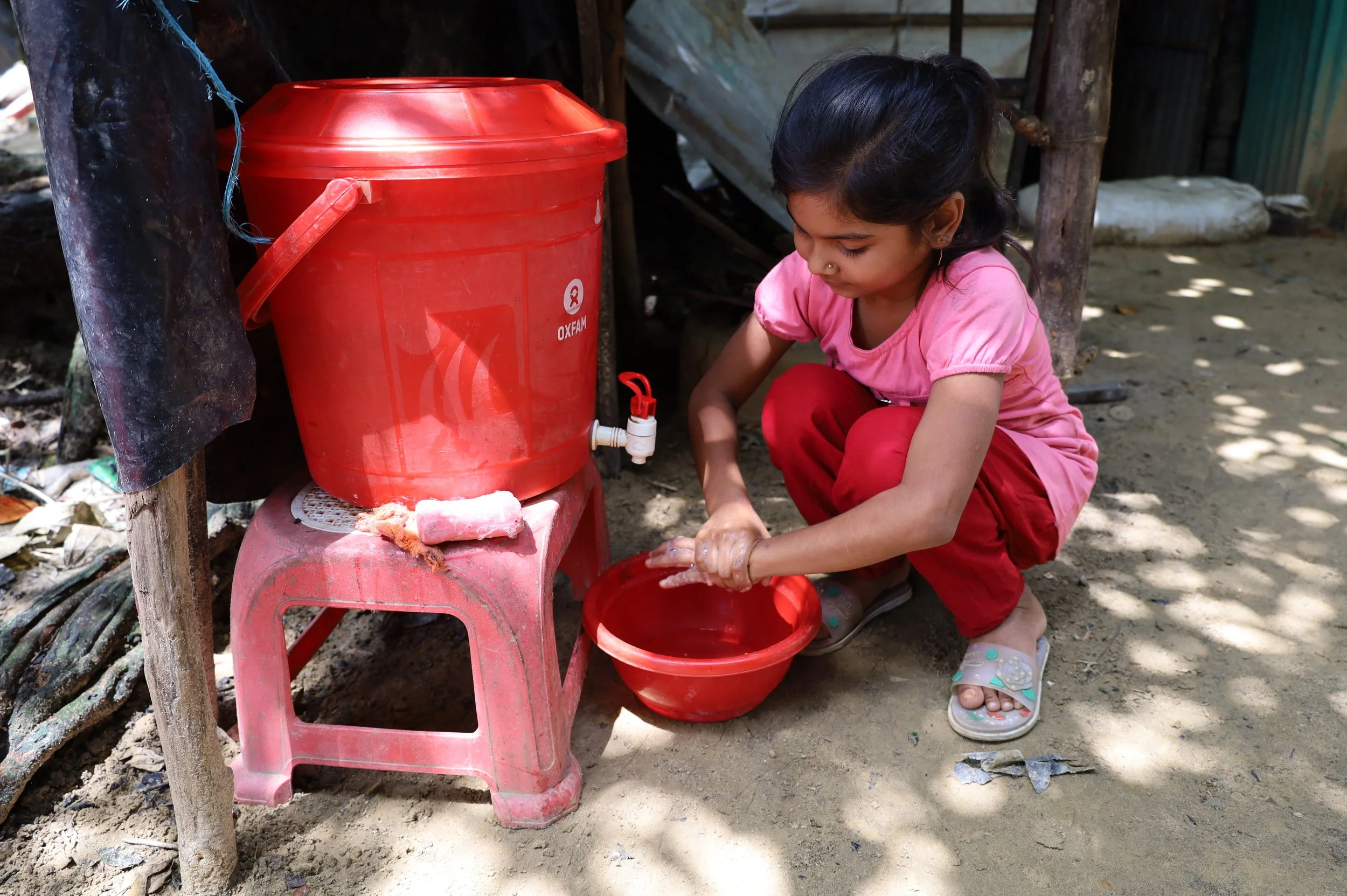
Above: Fatema’s daughter uses their household handwashing station. Photo: Mutasim Billah/Oxfam
In the small village of Pashimpara, within Whykong Union in Teknaf Upazila, Bangladesh, Fatema Begum was constantly worried about her young daughter’s health. Stomach issues like diarrhoea had become so common that visiting the doctor was part of their weekly routine. The medical bills kept piling up, and Fatema couldn’t help but feel that there was something she was missing—a small change that might finally bring her family some relief.
Whykong Union is a community facing numerous struggles. It’s home to over 60,000 people, many of whom, like Fatema, lack easy access to clean water and sanitation. A recent survey showed that nearly half the households face problems with collecting water, and many don’t have sanitary latrines. To make things harder, more than a million Rohingya refugees have settled nearby, putting additional pressure on local resources.
One day, a small team from Dushtha Shasthya Kendra (DSK), a local NGO working with Oxfam through the Australian Humanitarian Partnership response in Bangladesh, visited Fatema’s home. They were conducting hygiene sessions in the village, sharing simple steps to prevent illness.
Fatema remembered the visit vividly.
“They talked about washing hands. Something so simple, but it clicked for me. Maybe this was the missing piece,” she said.
Until that moment, handwashing had been just a routine she took for granted, not realising it could be the key to better health for her family.
Motivated by the DSK team’s guidance, Fatema decided to make handwashing a family habit. She and her husband set up a small handwashing area near the toilet, with a bar of soap and a jug of clean water. They began by reminding each other to wash their hands—before meals, after using the toilet, whenever they felt it was needed. It became a part of their everyday life, and her little girl started doing it happily, turning it into a playful habit.
The results were almost immediate. Within weeks, Fatema noticed that her daughter wasn’t getting sick as often, and doctor visits became less frequent.
“I couldn’t believe something so simple could change our lives like this. Our home felt healthier, lighter,” Fatema shared. “Learning about the importance of washing hands has given me peace of mind and better health for my family. I’m so thankful to the DSK team for showing us this.”
Fatema’s story is a powerful example of how a simple practice, like washing hands, can change lives. In Whykong Union, a recent assessment found that only 59% of households knew the critical times for handwashing. DSK’s efforts aim to close that gap, showing families like Fatema’s that small actions can bring big changes.
With gratitude and a smile, Fatema reflects on her journey.
“Sometimes, we think the answer to our problems is something big, but it can be as small as keeping your hands clean.”
Her story is a reminder that even the smallest changes, practiced with care, can create a healthier, happier life for a family.
This activity was implemented by DSK and Oxfam with Australian Government support through the Australian Humanitarian Partnership. The activities are part of the CARE-led consortium response with Oxfam and Plan International.