

‘Green queen’ Rajia grows food — and hope — for her family
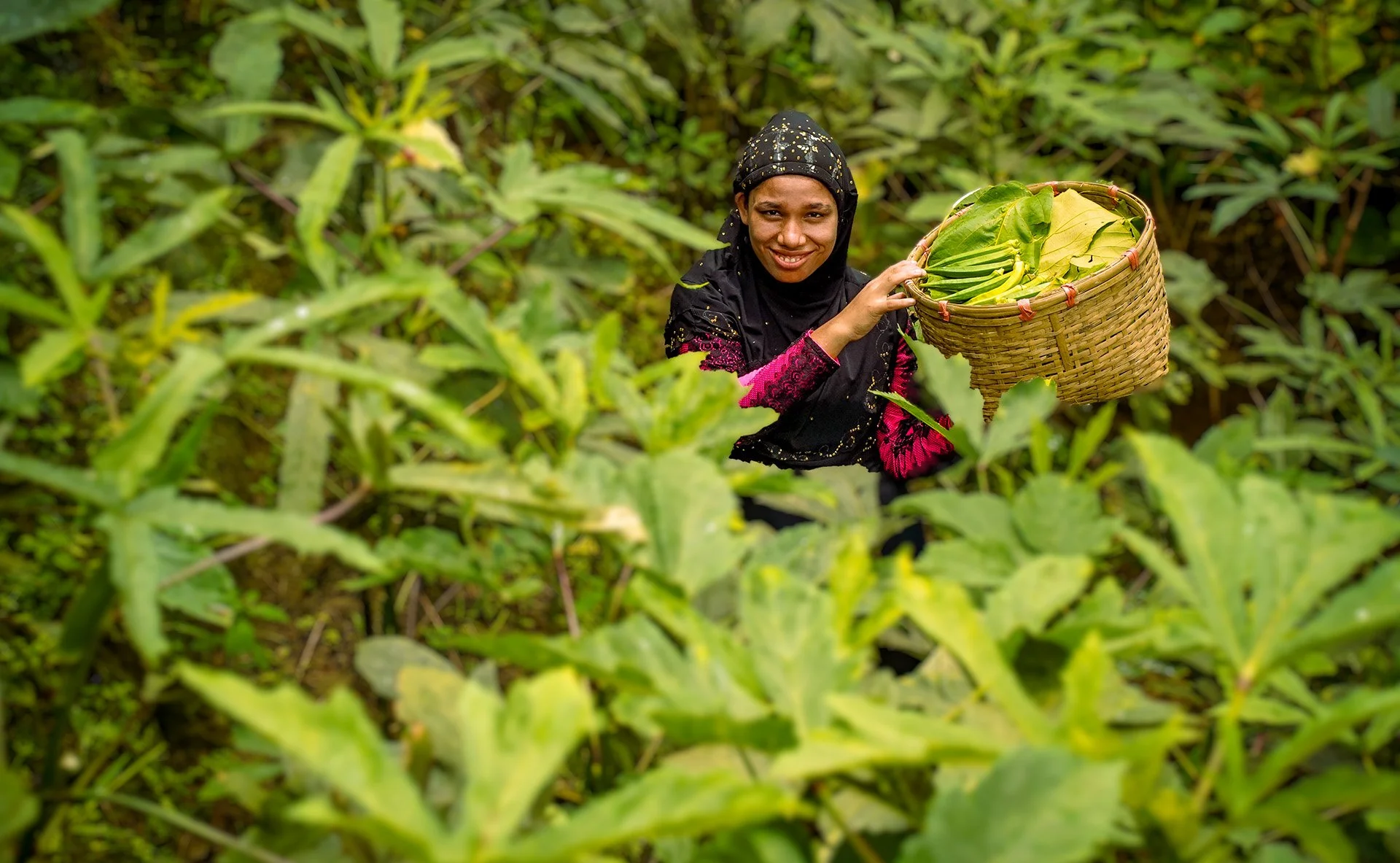
Above: 19-year-old Rajia is now known as a ‘green queen’ in her community for her thriving vegetable plots. Photo: Mahbub Alam/Plan International Bangladesh
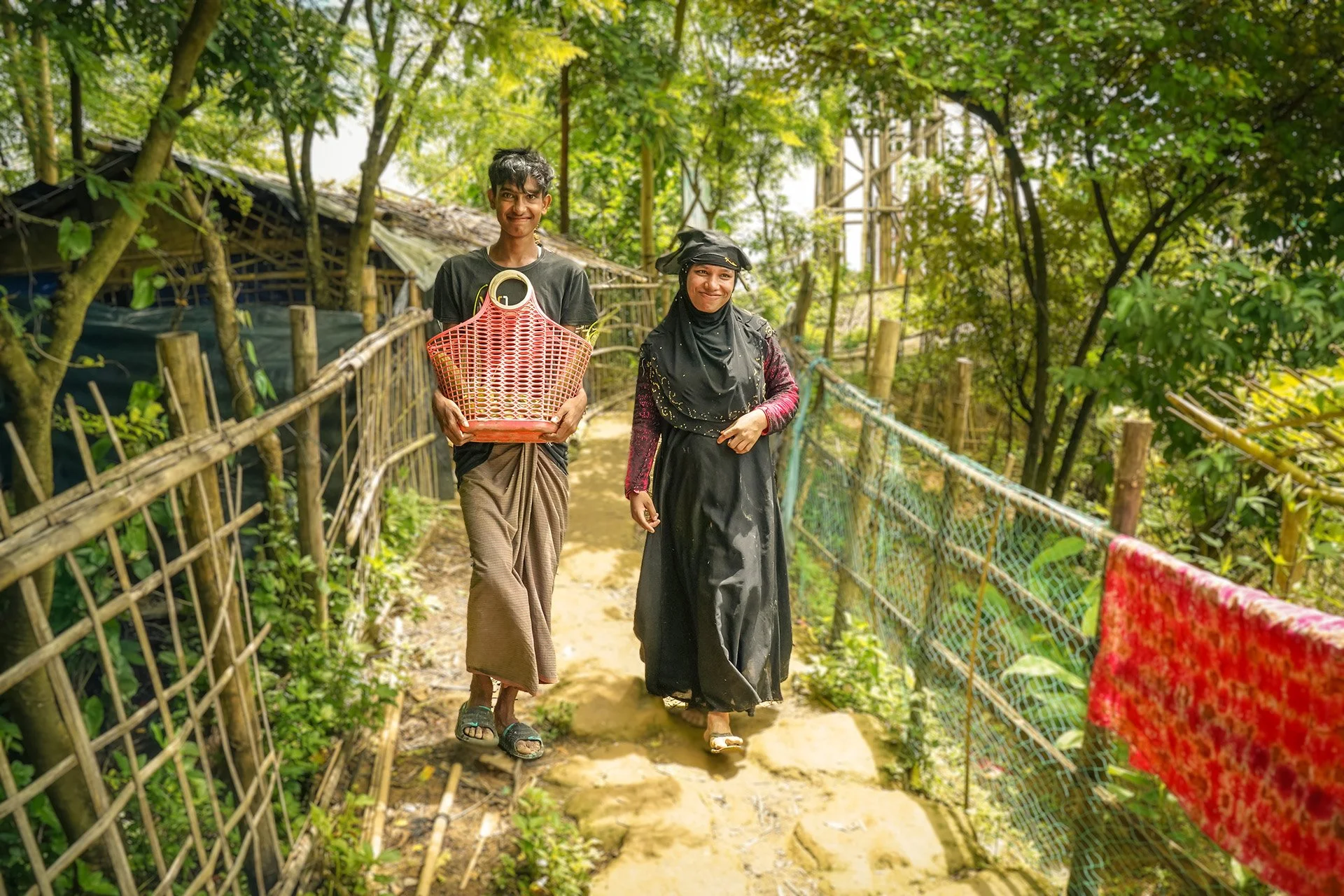
Above: 19-year-old Rajia with her brother Saleh, who supports her vegetable-growing endeavour. Photo: Mahbub Alam/Plan International Bangladesh
“The houses were burning, people were running to save their lives, and babies were snatched from their mothers’ arms. I don’t want to remember those memories,” said Rajia, a 19-year-old Rohingya girl now living in Bangladesh.
In 2017, the Myanmar army carried out a brutal massacre against the Rohingya, forcing nearly one million people to flee across the border. Among them was Rajia, who, along with her parents, two sisters, and brother, walked for four days before reaching a makeshift shelter in Teknaf Sadar. Even today, Rajia wakes up from nightmares, haunted by the violence she witnessed as a child.
After moving from makeshift shelters to camps, Rohingya families continue to face immense challenges. Life in the congested camps is an everyday fight for survival where food rations and livelihood opportunities are limited.
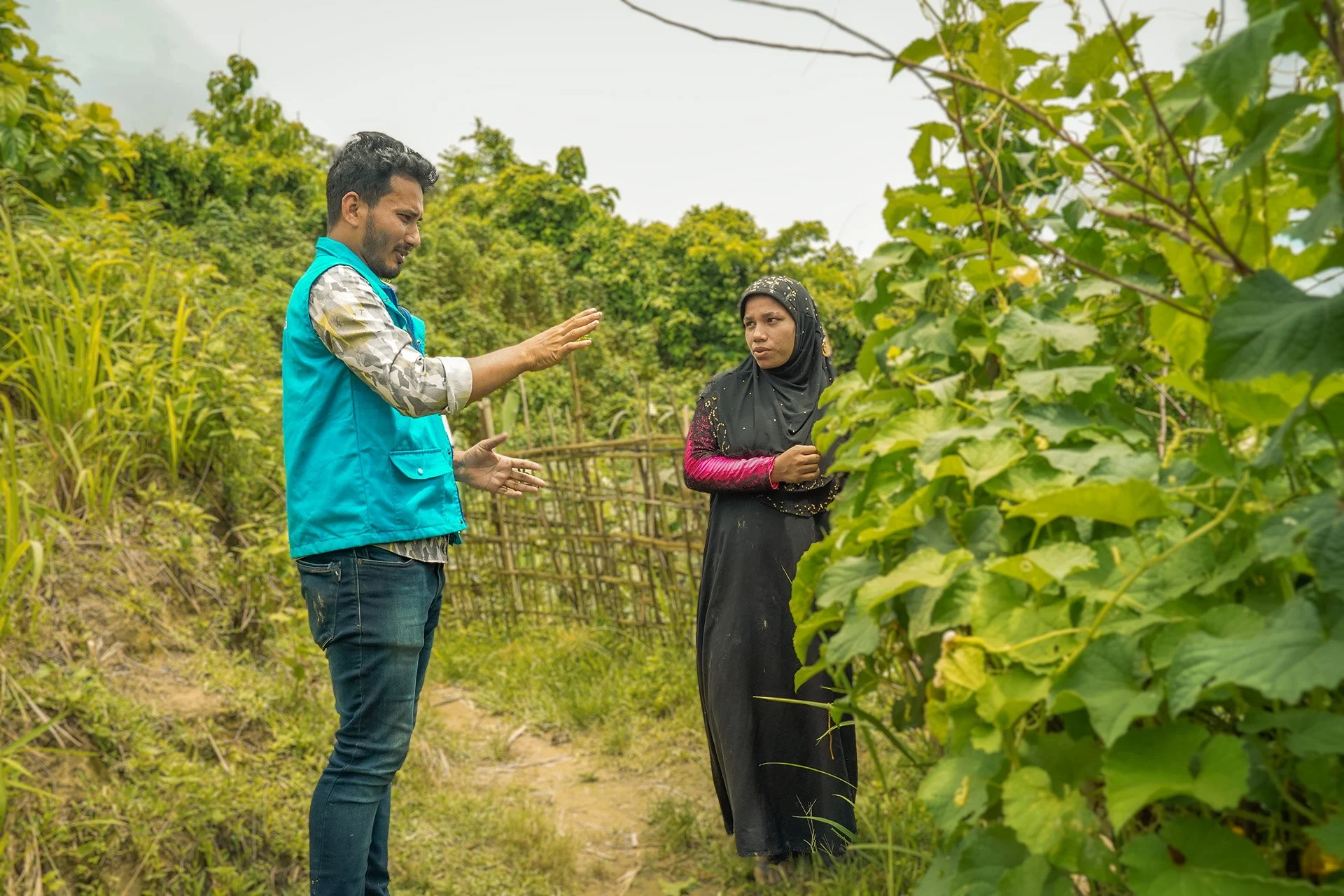
Above: 19-year-old Rajia speaks with a FIVDB volunteer, who helped her get her garden off the ground with support and training. Photo: Mahbub Alam/Plan International Bangladesh
With Australian Government support through the Australian Humanitarian Partnership, Friends in Village Development Bangladesh (FIVDB) — with technical support from Plan International Bangladesh — began identifying households with youth aged 18 to 24 to empower them so they can support their families and communities.
“Our goal is to provide training and essential inputs so they can become entrepreneurs, achieve food security, and earn for their families,” said Khadija Tul Cubra, Project Support Coordinator from Plan International Bangladesh.
Through the Participatory Rural Appraisal process, 800 participants were selected and underwent two rounds of technical training with farming inputs valued at 8,000 Taka (AUD 100) each. These inputs included bamboo, nets, ropes, organic fertilisers, seeds, and tools. Regular follow-ups support them in growing vegetables, enhancing family nutrition, and reducing negative coping strategies related to food insecurity.
The camp leader connected Rajia’s family to this project, and then their new journey began.
“Rajia is very focused, and with the support of her father and brother Saleh (18), they now grow vegetables not only in front of their shelter but also along the camp road and hillside near their shelter,” shared Al Feas Saboj, Livelihood Volunteer from FIVDB.
Rajia now grows seasonal vegetables like tomatoes, cucumbers, carrots, potatoes, spinach, eggplant, bitter gourd, cauliflower, and more. This not only adds nutrition to her family’s meals but also brings in cash to support expenses.
“My daughter is now a decision-maker like me in my family. Girls in the community often tell me they want to do business like Rajia,” her father Azam, shared proudly.
Since 2023, their family has become a role model for others in their community.
“Before, people in the community used to criticise me for working outside. Now, they come to me to learn the new techniques I use in my garden,” said Rajia proudly.
“We often refer to Rajia to show what is possible in this camp reality. She is like a green queen, growing hope and relief for the future,” said Khadija, Project Support Coordinator at Plan International Bangladesh.
This activity was implemented by FIVDB and Plan International with Australian Government support through the Australian Humanitarian Partnership. The activities are part of the CARE-led consortium response with Oxfam and Plan International.