

Vietnam Bualoi and Matmo typhoon response
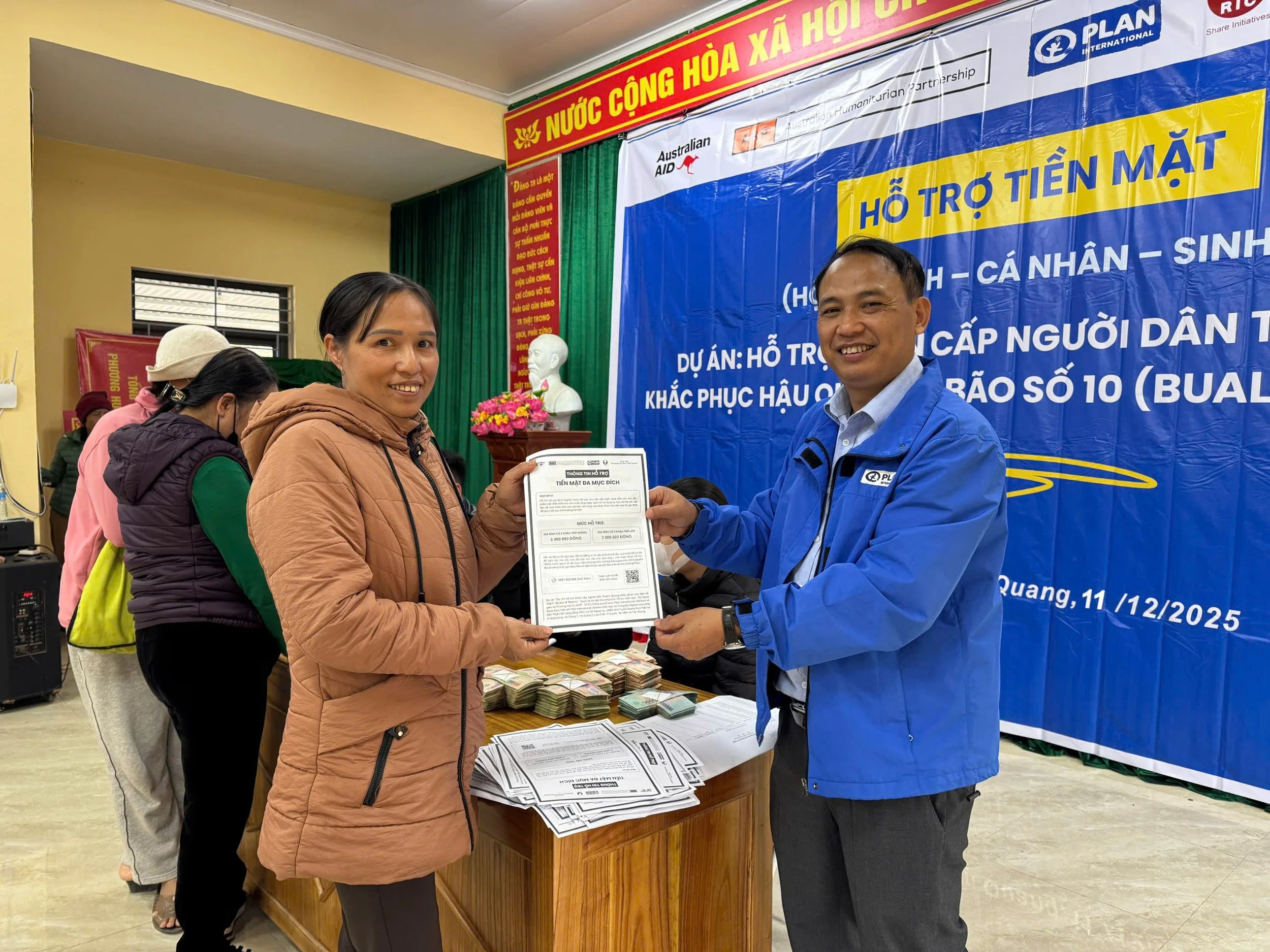
Above: Multipurpose cash assistance to those affected by the flooding in November 2025. Photo: Plan International
Between 29 September and 14 October 2025, 18 Northern and North Central provinces of Vietnam were hit by consecutive storms Bualoi and Matmo, causing severe flooding, landslides, and tornadoes. Over 80 people were killed or missing, 230,000 houses were flooded or damaged, and 87,000 hectares of crops were destroyed. Roads, schools, and medical facilities were devastated, with total damages estimated in the tens of thousands of billions of Vietnamese dong.
Immediate needs included clean water, food, shelter repair, and restoration of essential services. Vulnerable groups, particularly ethnic minority women, children, and persons with disabilities required urgent life-saving assistance, including safe shelter, drinking water, sanitation, food security, and livelihood recovery. Women faced heightened burdens managing care and rebuilding livelihoods with minimal resources.
Through the Australian Humanitarian Partnership, the Australian Government contributed AUD 1.5 million to support a six-month response to this crisis.
The AHP response
Two AHP consortia were selected to respond.
Oxfam and its local partner Thai Nguyen Provincial Red Cross are focusing their efforts on Thai Nguyen, the most heavily affected province where rainfall of 250–500 mm in a two-day period exceeded historical flood levels. Their response will focus on emergency food and livelihoods support — including multipurpose cash assistance, cash for nutrition to support pregnant and lactating women, and conditional cash for work opportunities — alongside water kit and dignity kit distribution, WASH facility restoration in schools and communities, and hygiene promotion.
Plan will work with local partner Centre for Research on Initiatives of Community Development (RIC) in the heavily impacted Tuyen Quang province to provide emergency food and livelihoods support, rapid restoration of damaged WASH facilities in schools and the community, as well as gender-based violence survivor services and child protection programming.