

Sudan crisis
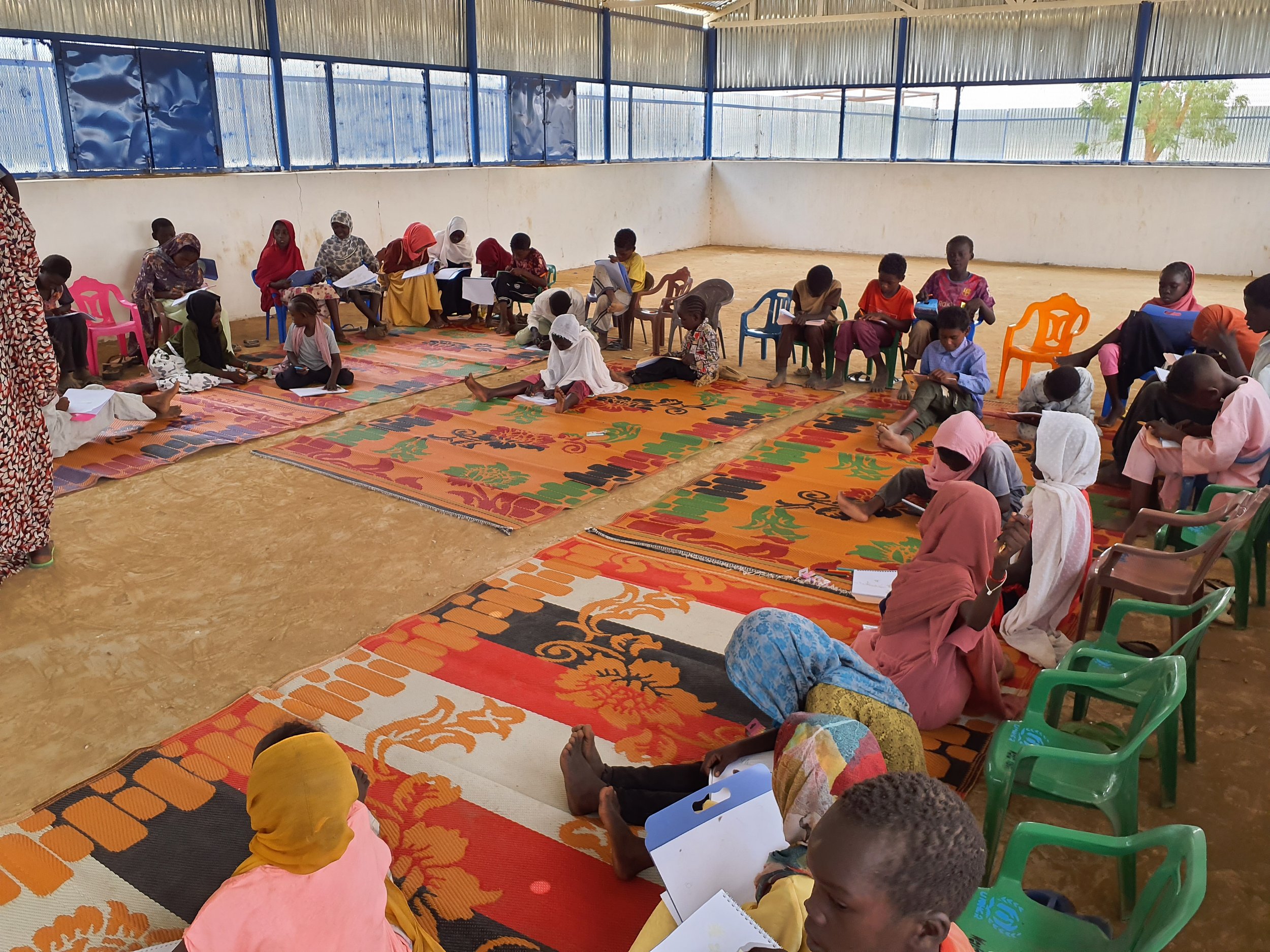
Above: World Vision education activities in Sudan. Photo: World Vision
Following more than two years of conflict, Sudan has become the world’s largest humanitarian and displacement crisis. Nearly two-thirds of the population need assistance. Approximately 11 million are internally displaced and another 3 million people have fled to neighbouring countries. Around 26 million people are facing acute hunger and famine. The number of people at risk of gender-based violence (GBV) has tripled since the conflict started in April 2023, now totaling more than 12 million.
The civil war has devastated communities, eroded governance structures, and crippled essential services.
The Australian Government announced AUD 3 million in November 2025 to support an activation of the Australian Humanitarian Partnership to respond to this deepening crisis and meet urgent humanitarian needs.
The AHP response
World Vision will lead a 12 month response to the crisis, working with local partners Sudan Aid Hand Organization (SAHO) in East Darfur and Jabal Mara Charity Organization (JMCO) in South Darfur.
Targeting both displaced and host populations and prioritising victim-survivors and women and girls at risk of gender-based violence, the project will expand access to specialised, lifesaving violence prevention and response services, including the establishment of Women and Girls Safe Spaces, confidential case management services, mental health and psychosocial support and case management. The response will also support and train Community-Based Protection Networks to identify, prevent and respond to protection risks while promoting inclusion, social cohesion and peaceful coexistence.
To meet urgent basic needs and reduce economic vulnerability and dependence on harmful coping strategies – key contributing factors to GBV in Darfur – the project will deliver multipurpose cash assistance to vulnerable households, distribute hygiene kits, construct gender-sensitive sanitation facilities, and rehabilitate and upgrade community water supply systems with piped connections.
Targeting internally displaced persons and at-risk host community members, the response will prioritise those experiencing multiple and intersecting vulnerabilities, while the combination of cash, non-food item support, and protection services will ensure the response addresses social and emotional wellbeing needs.
The response will coordinate and align with national priorities, while active engagement of local partners and community representatives will promote localisation, build ownership and strengthen sustainable frontline capacity for protection.