

Lebanon crisis response
In Lebanon, conflict and an escalation of hostilities continue to drive significant displacement across the country. According to the United Nations International Organization for Migration (IOM) Displacement Tracking Matrix, as of 1 July 2026 around half a million people remained internally displaced in Lebanon.
The resumption of large-scale hostilities in March has exacerbated already significant needs among Lebanese communities, with security, water, sanitation and hygiene (WASH), livelihood disruptions, health and education remaining critical concerns. Humanitarian operations are constrained by depleted stocks and reduced operational capacity due to global funding cuts.
The conflict has further compounded humanitarian needs, which were already significant due to Lebanon’s economic collapse, the Syrian refugee crisis, the impacts of the 2024 Israel/Hizballah conflict, and the Beirut Port blast in 2020.
AHP Response
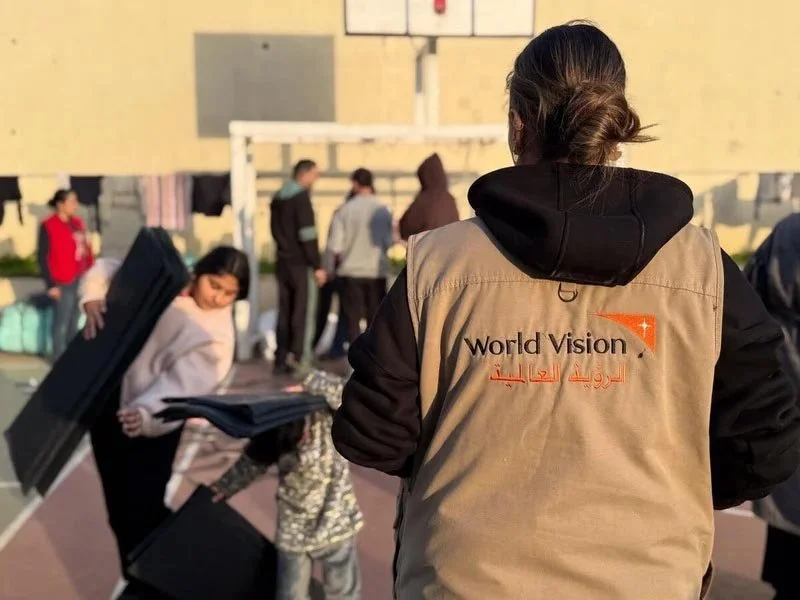
IMAGE: World Vision Lebanon
The Australian Government has allocated AUD $3 million to the Australian Humanitarian Partnership to respond to the humanitarian situation in Lebanon. Two coinciding responses led by CARE and World Vision have begun, ensuring impacted communities in Beirut, Aley, Chouf, Baabda, and Saida districts receive the support they need.
AHP Partner CARE is working in partnership with local organisations Society for Inclusion and Development in Communities and Care for All (SIDC) and Human Aid and Development (HAND). Their six-month response, entitled RESTORE (Reinforcing Essential Services, Targeted Outreach and Resilient Emergency Response), is delivering a rapid, partner-led response that restores and improves safe, inclusive WASH services for displaced and host communities. This work is being complemented by targeted sexual and reproductive health, mental health, and protection services for highly vulnerable groups. The project is responding to severe pressure on public infrastructure and essential services caused by large-scale displacement, while prioritising realistic delivery, immediate public health gains, and continuity of essential services.
RESTORE will support populations both in collective shelters as well as those living outside of them, including hard-to-reach households and communities facing barriers to humanitarian assistance.
World Vision, in partnership with Imam Sadr Foundation (ISF) and WILL Association (WA), is delivering an integrated Gender Equality Disability Social Inclusion (GEDSI)-responsive WASH, health and protection response through established operational platforms. This project responds to documented WASH and primary health care service gaps, as well as escalating protection risks. The World Vision response builds on active operations in target areas by sustaining critical services currently at risk of interruption due to funding shortfalls and extending targeted health and outreach support to displaced populations and host communities outside collective shelters.
The AHP’s Lebanon Crisis Response will conclude at the end of November 2026.