

Tropical Cyclone Maila
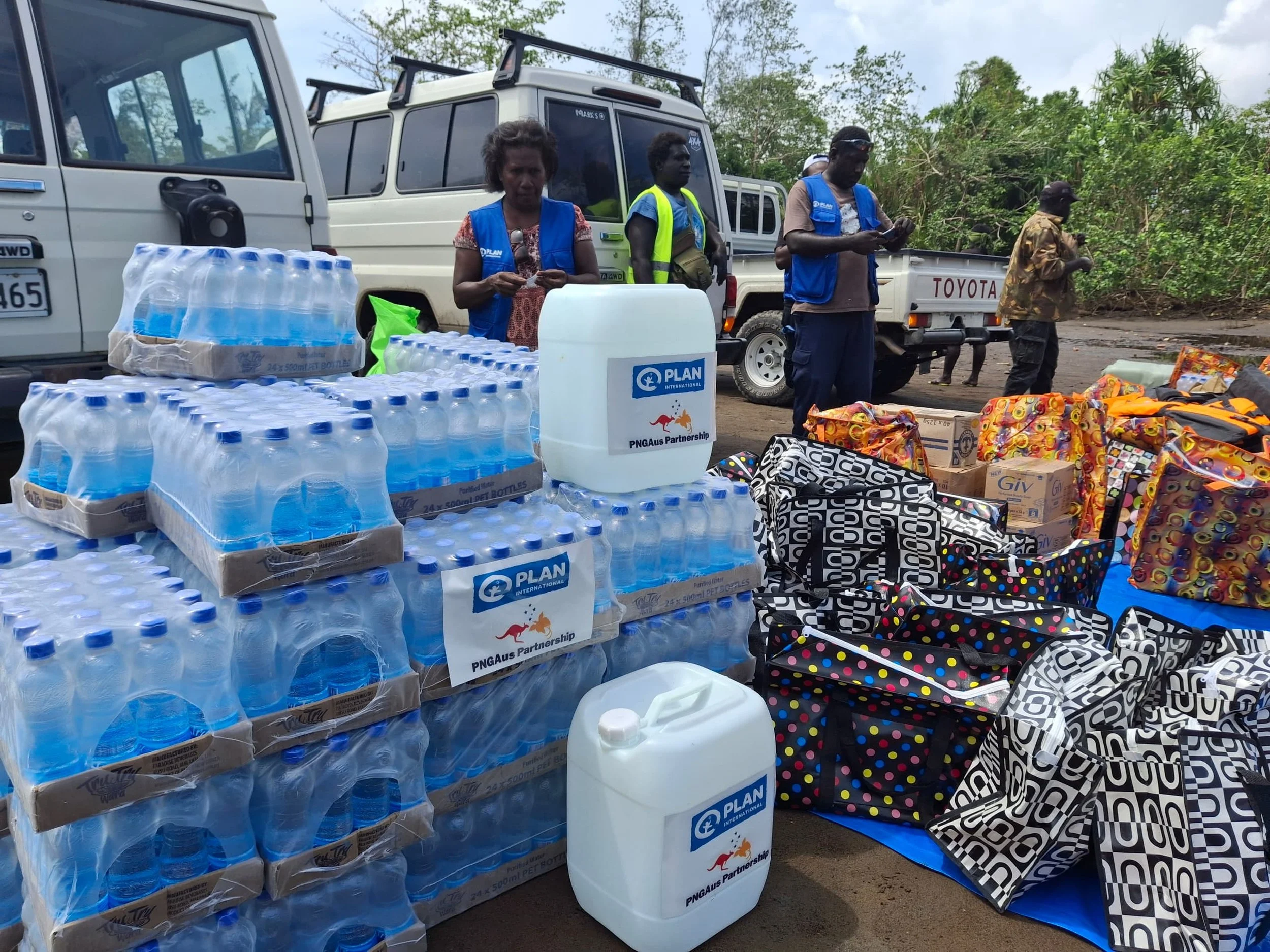
ABOVE: Plan International delivers life-saving support to communities in the Autonomous Region of Bougainville through the Australian Humanitarian Partnership with support from the Australian High Commission in Papua New Guinea. IMAGE: Plan International
In early April 2026, Tropical Cyclone Maila developed in the Solomon Sea, causing heavy rainfall and strong winds which led to floods, landslides, and severe weather-related incidents across eastern Papua New Guinea and the Solomon Islands. The impact of slow-moving TC Maila was considerable, especially for vulnerable low-lying and atoll communities, and resulted in deaths, injuries and significant damage to community infrastructure.
In PNG, the Autonomous Region of Bougainville (ARoB) and Milne Bay were among the most severely impacted regions, with casualties and widespread infrastructure damage as bridges and roads were washed away. In addition to shelter and hygiene needs, food security emerged as a primary concern as low-lying atolls and islands had homes and food gardens destroyed or submerged.
In the Solomon Islands, damage caused by TC Maila led to a State of Disaster being declared for Western and Choiseul Provinces, which saw the most significant damage. Further effects were noted across country, with coastal areas and low-lying islands being especially vulnerable to flooding and storm surges.
The AHP response
On 12 April, the Australian Government announced its support for communities in PNG and the Solomon Islandsimpacted by TC Maila.
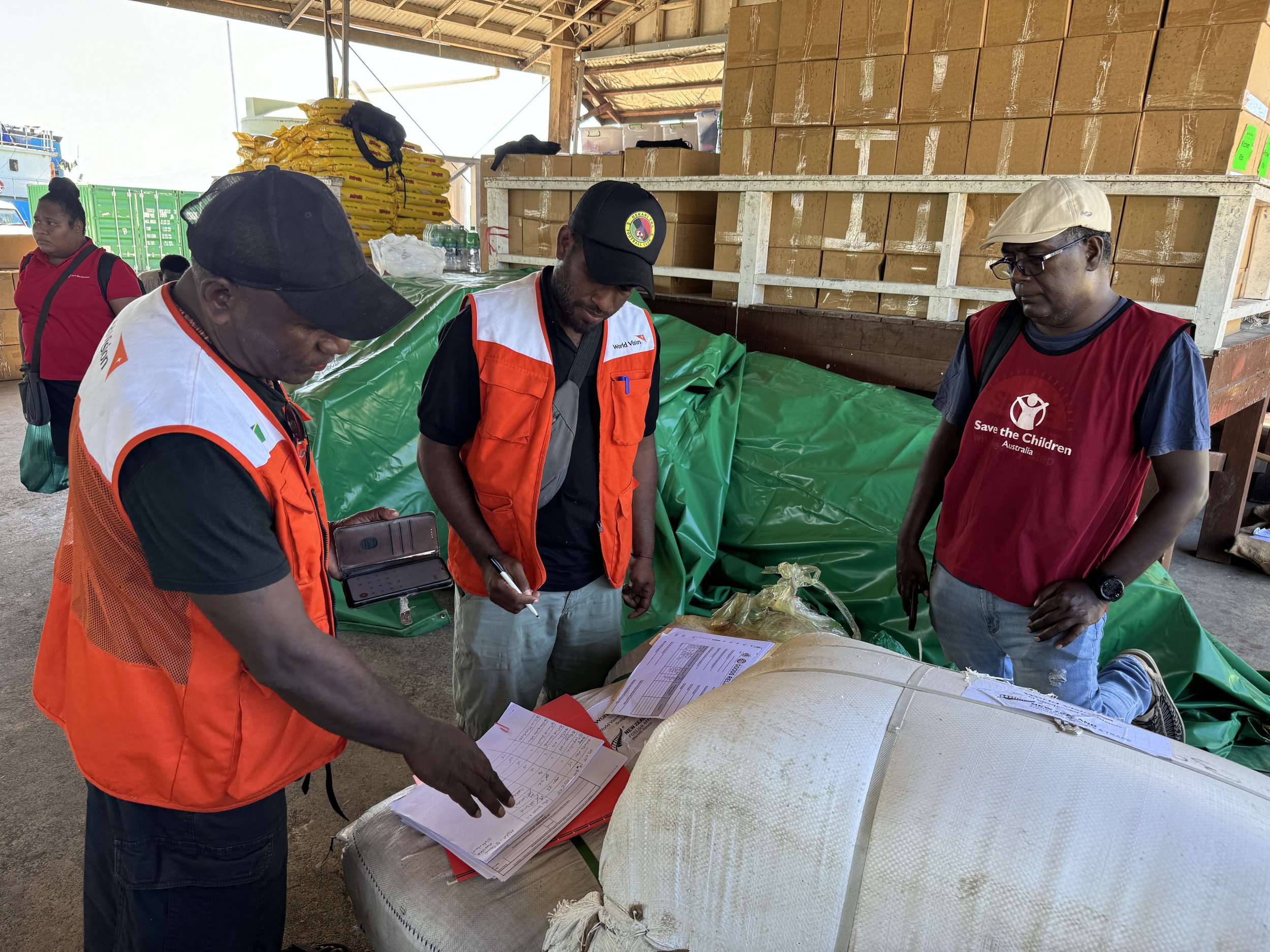
ABOVE: Save the Children and World Vision staff working in partnership to quickly meet the needs of impacted communities in Gizo, Solomon Islands. IMAGE: Save the Children Solomon Islands
The long-standing relationships and mechanisms developed by the AHP over the years enabled rapid response to the needs of affected communities. In PNG, the Australian Government released pre-positioned emergency response funding designed to support rapid response to sudden-onset disasters or local-level emergencies in the country. Through this mechanism, Plan International and CAN DO are supporting affected communities in Milne Bay and ARoB.
In the Solomon Islands, the Disaster READY Country Committee developed a rapid response plan, bringing together multiple AHP NGOs and local response partners in a coordinated, multi-sectoral response across Western and Choiseul Provinces. This coordinated response involves Save the Children, Plan International, CAN DO church agencies and World Vision. Together, AHP partners have leveraged their significant operational footprint, goodwill in local communities, and complementary technical expertise to deliver a locally-led response, building off the long-term community-led disaster preparedness systems fostered under the Disaster READY program This effort focuses on emergency food, basic needs, and non-food items, while supporting families to restore food production and livelihoods through access to agricultural inputs and technical support. Partners will also provide essential protection, education, and health services.