

She made it happen: How one woman project-managed her own cyclone-safe home
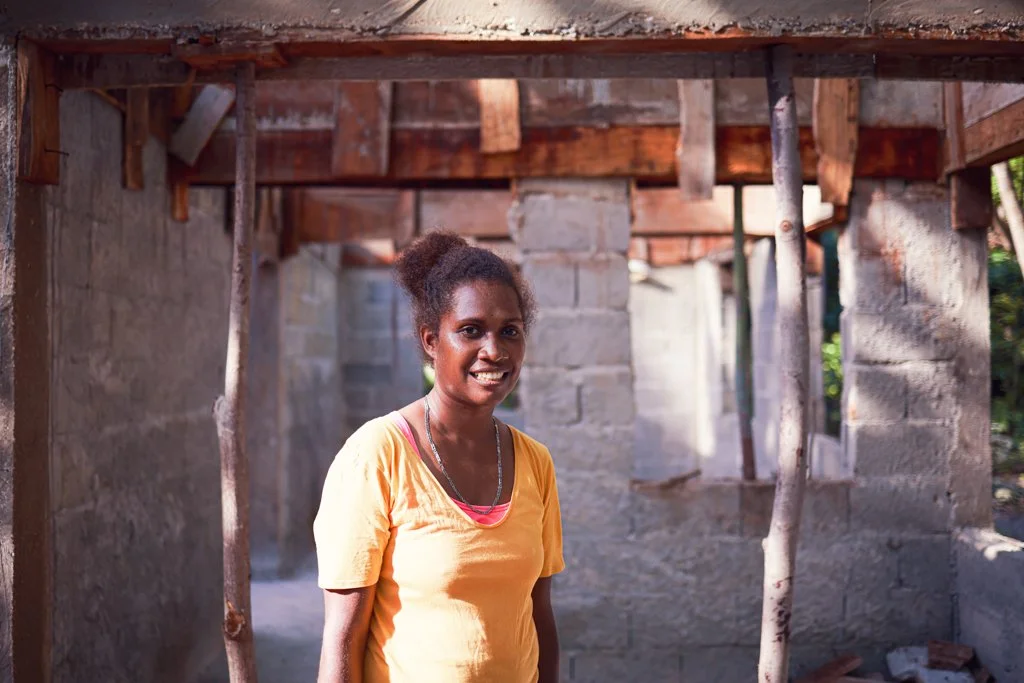
ABOVE: “I’m just so grateful for this life-changing workshop.” Lenny stands proudly in front of what will be the new family home. IMAGE: David Demmet/World Vision in Vanuatu
By Evelyne Tovovur, World Vision in Vanuatu
In Vanuatu’s northernmost province, a house is rising—and with it, the story of a woman who quietly took charge. It belongs to 29-year-old Lenny, a mother, wife, and first-time project manager. The house, now almost complete, is cyclone-safe, built with care, and shaped by her determination.
For years, Lenny lived with her in-laws, raising her son while her husband worked overseas under the seasonal worker scheme. He’s away nine months at a time, supporting the family financially. But the decision to build a house didn’t come from him—it came from her.
“I just decided,” Lenny says. “I wanted us to have our own place.”
In early 2024, she heard about World Vision’s Haos Blong Yumi (HBY) training—a program supported through the Australian Humanitarian Partnership’s Disaster READY initiative, which helps families of seasonal workers plan and manage the construction of safer homes. Lenny didn’t wait for someone else to take the lead. She joined the one-week training and absorbed everything she could: budgeting, planning, hiring, coordinating sea and land transport, the correct industrial-standard cement mix for a cyclone-proof home, and supervising a build from start to finish.
When the training ended, she had a plan in hand. She called her husband to let him know the wheels were in motion. He supported her fully. From then on, the two became a team: he continued earning money overseas, while Lenny managed the entire build back home.
She worked closely with a local builder, keeping track of materials, ensuring progress stayed on schedule, and solving problems as they came. One of her biggest challenges was transporting building materials from the banana-boat landing to her construction site—each trip cost 2,000VT. To cut costs, Lenny collected sand and coral herself, making multiple trips on foot, allowing the budget to be spent instead on cement bags and other materials arriving from Santo.
“I just thought—why spend money on things I can do?” she says. “It wasn’t easy, but from the workshop we learned that things we can do ourselves, we should, in order to save money for other things.”
Stage by stage, the house took shape—from the foundation to the construction of the cement roof currently underway. Nearly finished, it’s already drawing attention in the community for the sheer determination and persistence she’s shown in making it happen.
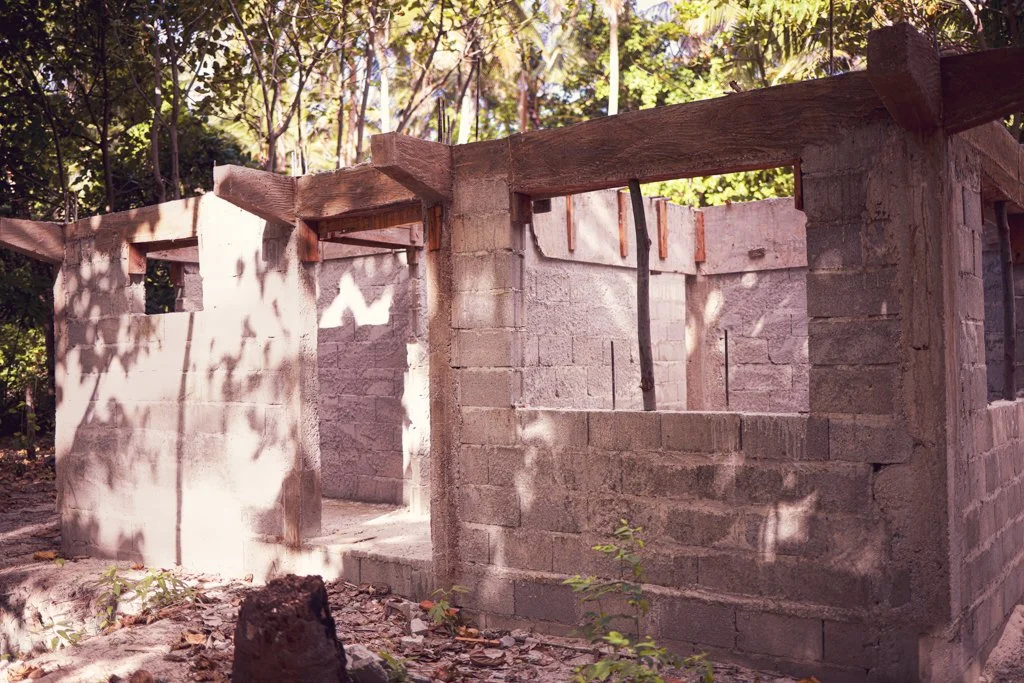
ABOVE: With the right guidance, Lenny has project managed all aspects of her house to date. IMAGE: David Demmet/World Vision in Vanuatu.
Out of the 11 women who attended the Haos Blong Yumi training that March, Lenny is the only one who has led her own build to this point. In a place where managing construction is often seen as a man’s role, she’s proving that women can take the lead too—with the right support from their partners.
“My favourite part about all this is learning about management,” she says. “I learned how to manage money, how to build a house, how to mix and cook a cement block, and I’m just so grateful for this life-changing workshop.”
The house Lenny has built will offer her family a safer, stronger future. But it also carries the quiet evidence of what’s possible when women step up—not because someone asked them to, but because they knew they could.
“This house will always remind me,” she says, “that mi no give up. Mi mekem.”