

Restoring what was lost: Mangrove decline and community-led recovery on Ughi Island
By Terence Ziru, DRCC Communications Coordinator, Solomon Islands
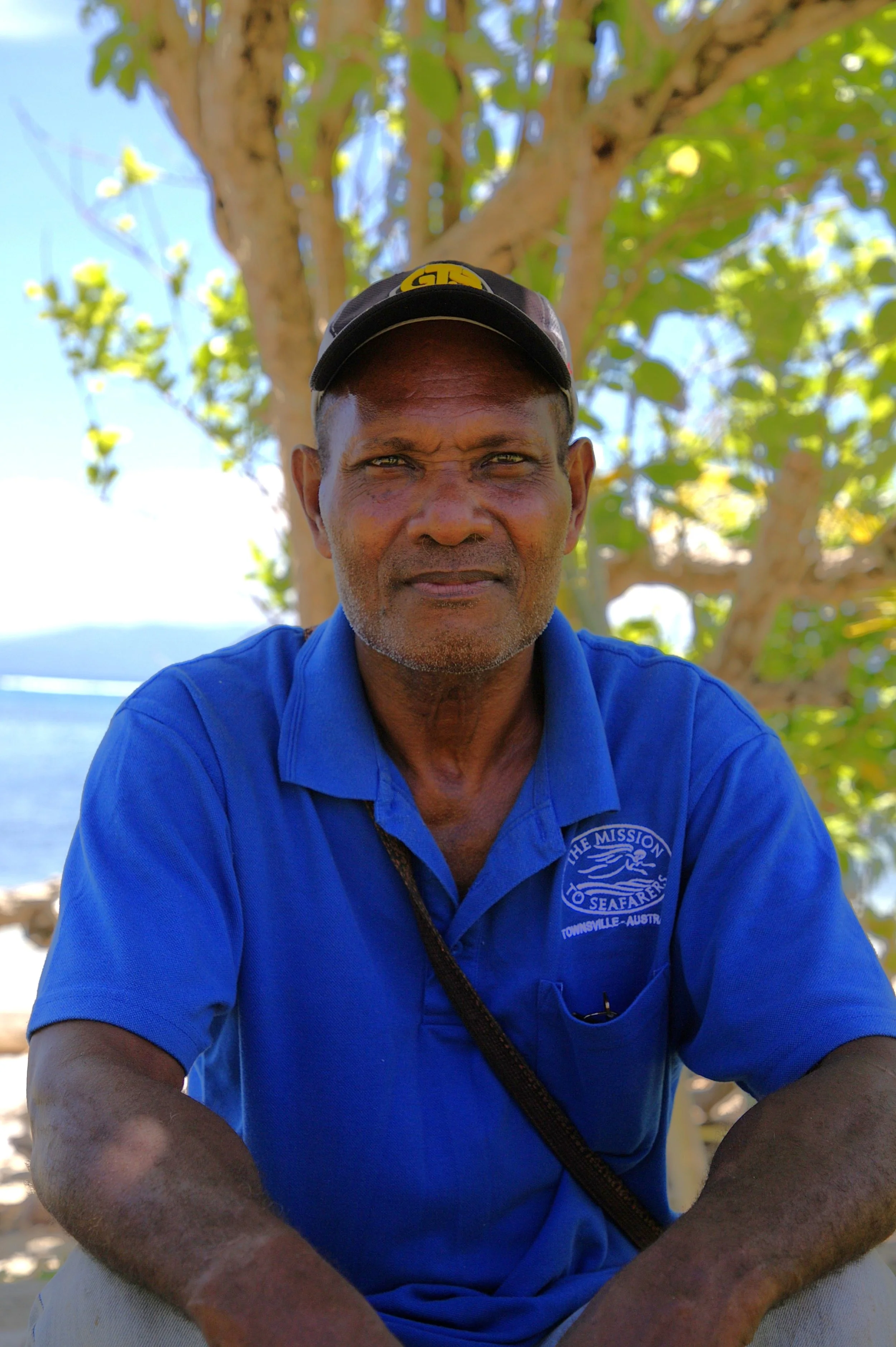
“Mangroves were never like this during my time as a youngster,” Mr Hamilton said, reflecting on how quickly the landscape has changed. IMAGE: Terence Ziru/on behalf of World Vision in Solomon Islands
Along the coastline of Ughi Island in Makira Province, mangroves once formed a dense natural barrier between land and sea—supporting marine life, protecting villages from storm surges, and sustaining livelihoods. Today, those mangroves tell a different story: one of rapid decline, hard lessons, and renewed hope driven by community determination.
According to Mr. Hamilton of Manipua Village, Chairman of the Village Committee, mangrove loss has been both visible and alarming. “Mangroves were never like this during my time as a youngster,” he noted, reflecting on how quickly the landscape has changed.
The area now identified as a replanting zone was once a thriving swamp ecosystem rich in fish, crabs, and other resources that supported village households. Environmental changes, combined with human intervention, dramatically altered this ecosystem.
In 2021, villagers opened a natural barrier that had previously restricted seawater flow, intending to drain the swamp during rainy seasons. Instead, saltwater flooded the area, destroying vegetation and accelerating mangrove decline. What was once productive and alive became degraded and lifeless.
Recognising the urgency of the situation, Manipua Village began early attempts to replant mangroves. However, these initial efforts were unsuccessful, with seedlings failing to survive and progress proving slow and discouraging.
Support later came through the Australian Government’s Disaster READY program. Through a series of community dialogues in Manipua with Mr Hamilton and guided by World Vision, local residents gained a stronger understanding about the vital role mangroves play in climate resilience, coastal protection, and supporting marine biodiversity. Community members, including women and young people, gained important knowledge on mangrove nursery management and sustainable resource conservation. Ultimately, the community became more committed to preventing mangrove destruction, pollution, and unsustainable practices that damage coastal ecosystems.
Importantly, the conversations encouraged the community to “think outside the box” rather than repeat approaches that were not working, which ultimately led to opportunities for shared learning and experiences with neighbouring villages, as well as lessons on effective and ineffective replanting methods.
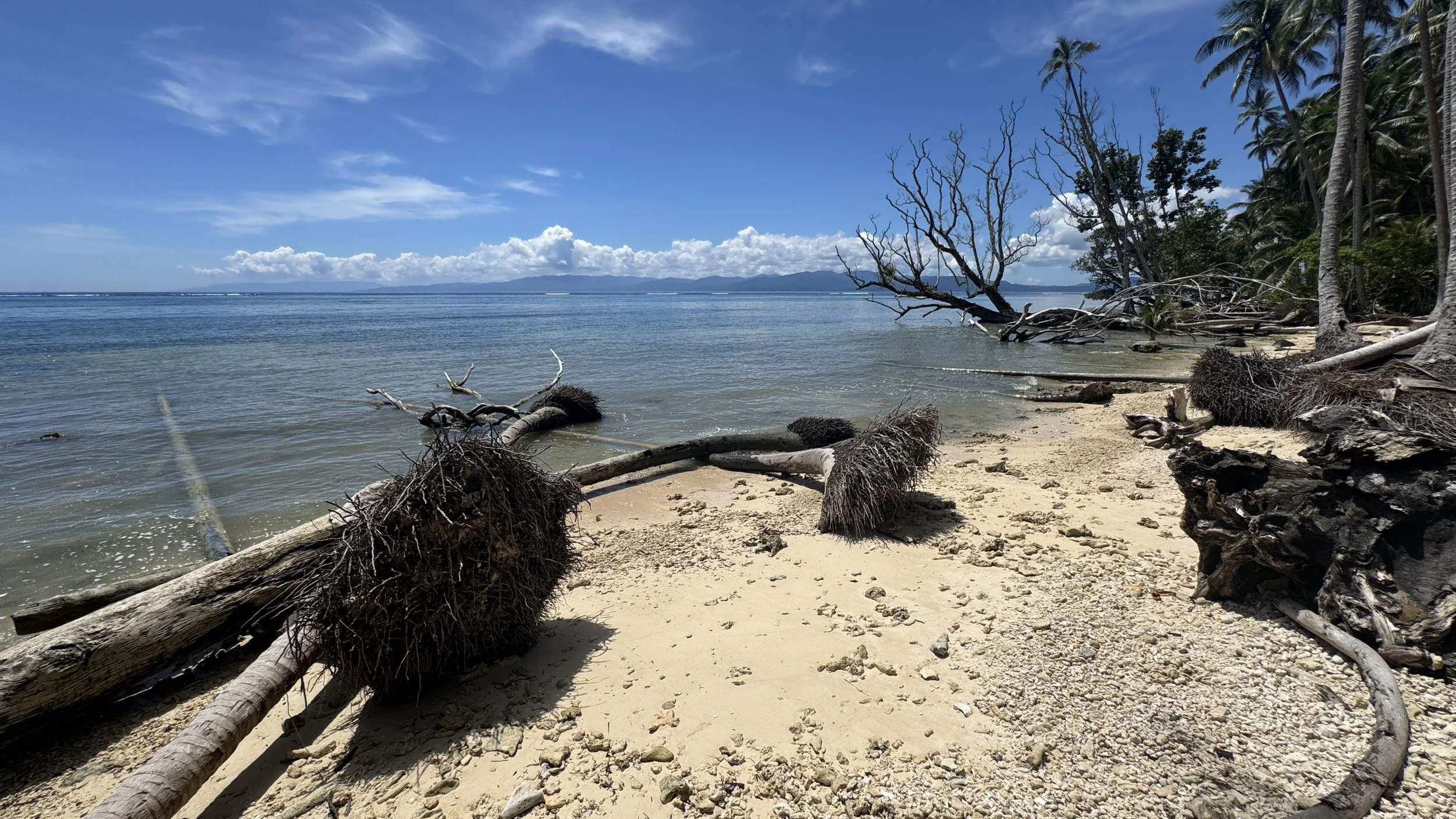
Coastal communities like those on Ughi Island are seeing the impacts of climate-rated rising sea levels. IMAGE: Tim Muir/AHPSU
Drawing on training and his own knowledge of the local environment, Mr. Hamilton experimented with several planting techniques. After multiple trials, he identified an approach that showed promising results. Today, mangroves in the replanting zone are showing visible signs of growth, restoring confidence within the community.
Mr. Hamilton credits this success to the ability to adapt and combine their knowledge of Manipua together with the informative training received, resulting in Manipua Village now able to support and advise other communities facing similar mangrove restoration challenges.
Despite the progress, Mr. Hamilton remains realistic. Mangrove restoration is a long-term process, and it will take years before the ecosystem reaches semi-maturity. Nevertheless, he continues to advocate strongly for the project, even as some villagers grow impatient. The effort, he says, is not only for today, but for children and grandchildren who will one day benefit from restored coastal protection and livelihoods.
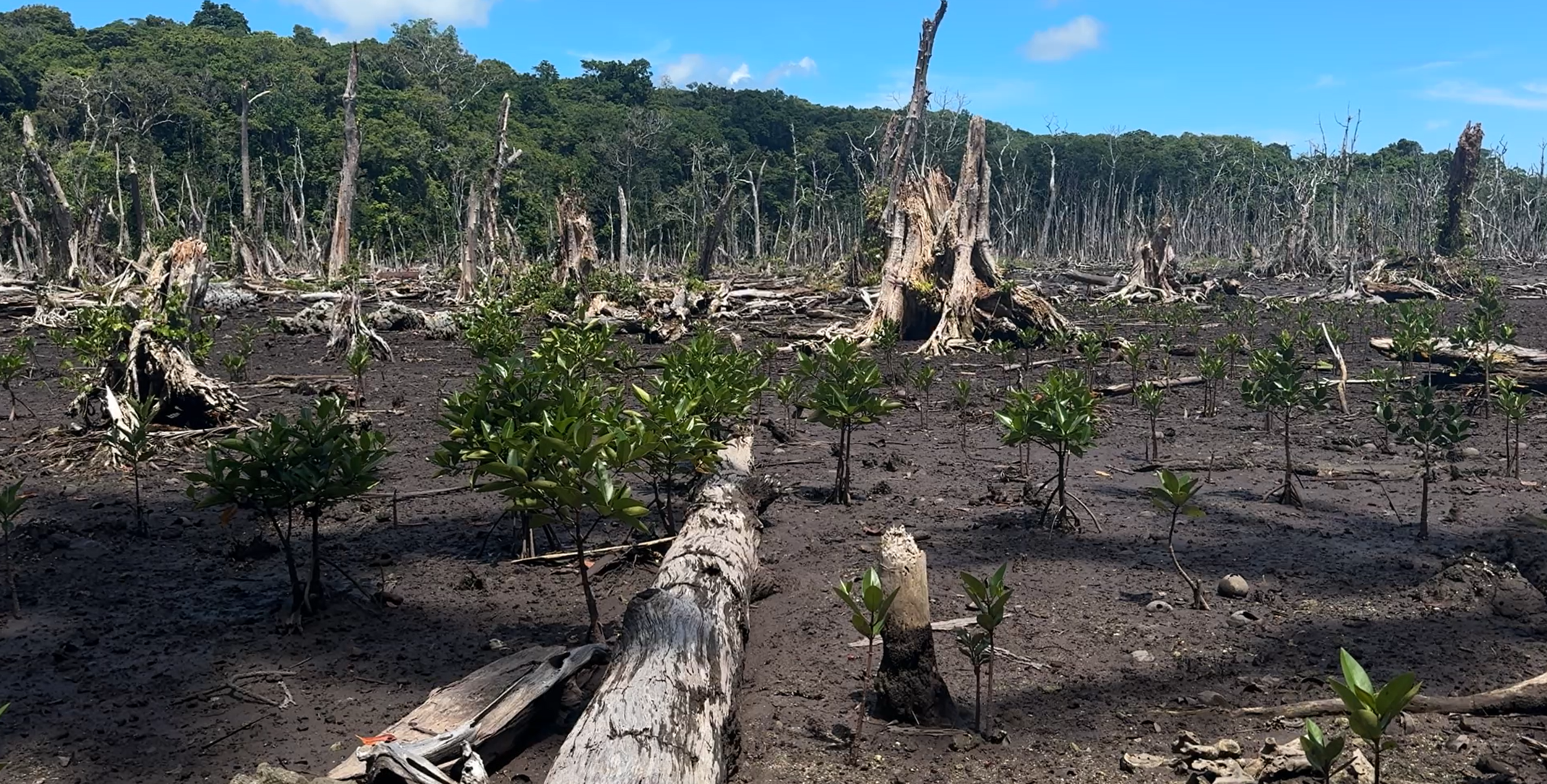
A combination of local knowledge and practical training has helped mobilise the community of Manipua to to replant mangroves in Makira Province. IMAGE: Tim Muir/AHPSU
The mangrove story of Manipua Village is not only about environmental decline, but also about learning, persistence, and community leadership. Through the Australian Humanitarian Partnership and World Vision, resilience-building and life-saving projects continue to support communities to recover, adapt, and protect vital natural ecosystems, and while full recovery will take time, the growing mangroves along the coastline stand as a strong and hopeful sign for the future.