

By Annicka Tamseul, Santo MEAL Coordinator, Save the Children Vanuatu
On a small island in Sanma Province, Vanuatu, disaster preparedness is now being led by the community itself, and everyone is being given the opportunity to contribute. Through the Australian Government’s Disaster READY program, community members have formed Community Disaster and Climate Change Committees (CDCCCs) and learned the six steps of the Community-Based Disaster Risk Reduction (CBDRR) handbook. For Peter, a person with disability, involvement with the CDCCC provided a pathway to leadership opportunities, increased confidence, and a way to help give back to his community.
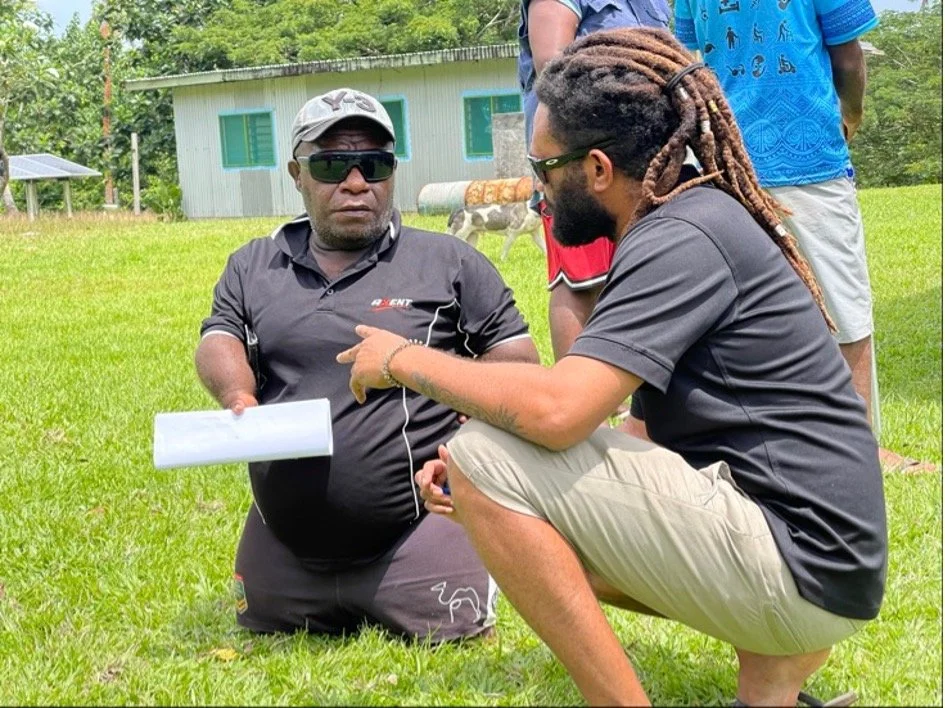
“People did not see my disability; they saw the ability I have,” Peter said after being elected the head of a Community Disaster and Climate Change Committee.. “I accepted the role because I wanted to help my community.” IMAGE: Annicka Tamseul/Save the Children
Mavea island is off the larger island of Santo. For many families, travelling by boat is part of daily life, and access to services, information and support can be challenging, especially when hazards such as drought affect the community. When the Disaster READY project staff invited community members to a meeting, people came with curiosity, not knowing that the discussion would help shape a more organised and inclusive approach to disaster preparedness.
At the meeting, the team introduced Disaster READY, and explained the importance of communities being prepared before disaster strikes. The discussion focused on establishing CDCCCs so that local people could lead planning, share information and support each other during emergencies. Mavea is a small community of 321 people living in 118 households, comprising 94 women, 75 men, 65 boys, and 86 girls, including 12 people living with disability (7 women, 5 men). Because of its geography and church groupings, the community recognised that two committees were needed to make sure preparedness actions reached everyone.
During the set-up of the committees, community members looked beyond disability and focused on ability, commitment and trust. Peter (pictured above) was elected as Chairperson of the Seventh Day Adventist CDCCC. This moment showed what inclusion can look like in practice: a person who might otherwise be left out of decision-making was recognised as a leader with knowledge, influence, and responsibility.
“People did not see my disability; they saw the ability I have,” Peter said. “I accepted the role because I wanted to help my community.”
After the committees were formed, members took part in two weeks of training on the six steps in the Handbook. The training helped committee members understand how to identify hazards, map risks, develop community profiles, prepare action plans and agree on response plans. For Peter, the training built both knowledge and confidence.
With his committee, Peter helped lead awareness activities in the island’s school, reaching around 43 students at Dambulu Primary and Pre-School with information about hazards that could threaten families, children, and the wider community. Leading these sessions strengthened his own capacity while also helping students and teachers understand what they can do before, during and after a disaster. The activity showed that preparedness messages are more powerful when they are shared by local leaders who understand the community’s realities.
The committee also worked with community members to develop a community profile, Community Action Plan (CAP) and Community Response Plan (CRP). These tools helped people discuss their priorities and agree on practical steps to reduce risk. Drought was identified as the number one concern for the area, particularly during the dry season when access to water becomes difficult and families face added pressure. In response, the committee prioritised a CAP project to upgrade Mavea’s solar-powered water systems. The project is increasing water storage and making accessible, lockable tap stands, helping ensure clean water remains available to every household during drought and after disasters.
Peter facilitated a planning session with community members to discuss how to address this challenge. The conversation was not always easy because households have different daily priorities, but the process created space for people to listen, share ideas and work together.
The story from Mavea reflects the wider purpose of Disaster READY: when communities lead their own preparedness, and when women, men, young people and people with disabilities are included, disaster risk reduction becomes stronger and more sustainable. Inclusion is not only about participation; it is about recognising leadership, removing barriers and making sure that the people most affected by disasters have a voice in the decisions that shape community safety. With children making up almost half of Mavea’s population, these decisions matter deeply. Safer households, stronger preparedness and more reliable access to clean water help protect children’s health, support their learning during the dry season and reduce the disruption that disasters bring to their daily lives. For Peter and his CDCCC, the next steps are clear: continue awareness, support planning and work with the wider community to address drought risk. For Mavea, the impact is already visible. Disaster preparedness is no longer something brought from outside; it is being carried forward by local people, including leaders with disability, who are helping ensure that no one is left behind.