

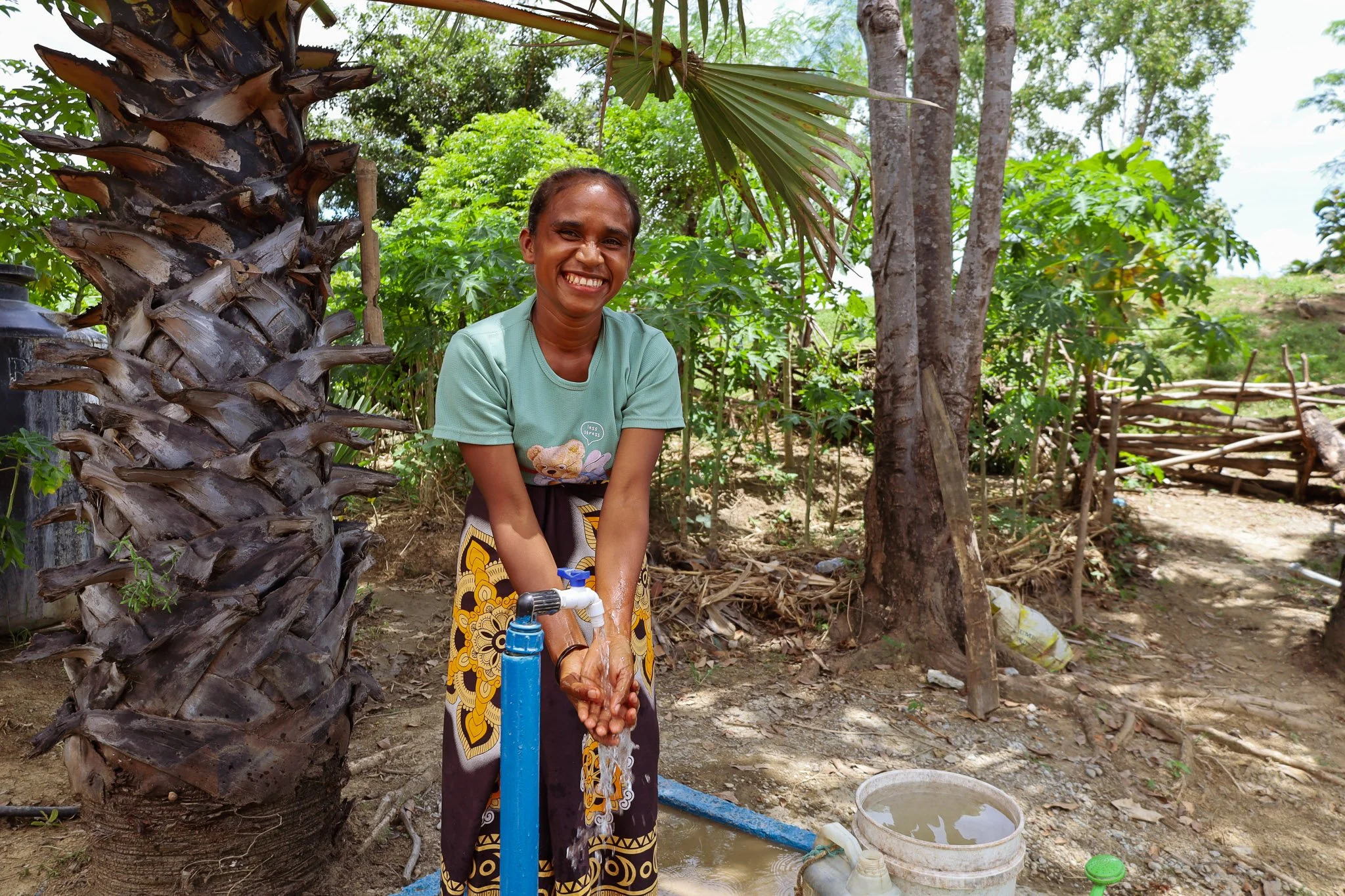
“Before, we struggled so much to get water.” Anita Sufa reflects on the long journeys to collect water before a community-led initiative brought water closer to homes in Oe-Cusse, Timor-Leste. IMAGE: Aderito do Rosario da Cunha Mambares/Oxfam in Timor-Leste
By Aderito do Rosario da Cunha Mambares, Communications Coordinator, Oxfam in Timor-Leste
In the remote municipality of Oe-Cusse, access to clean and reliable water was once a daily struggle. For years, families—especially women—walked long distances over difficult terrain just to collect two buckets of water for cooking, washing, and drinking. This routine consumed hours each day, limiting opportunities for livelihoods, rest, community development and disaster preparedness. The journey of fetching water itself was challenging as the terrain is steep and narrow, making it physically difficult and sometimes risky. There were also social pressures, for example, some women noted that their husbands might question their movements or assume they were doing something else instead of fetching water, which added another layer of stress. Before having access to water nearby, families did not have proper bathrooms or toilets, meaning they had to go into the bushes to relieve themselves. This made them feel unsafe due to the open environment and there was always a risk that someone might pass by, and there was concern about animals nearby.
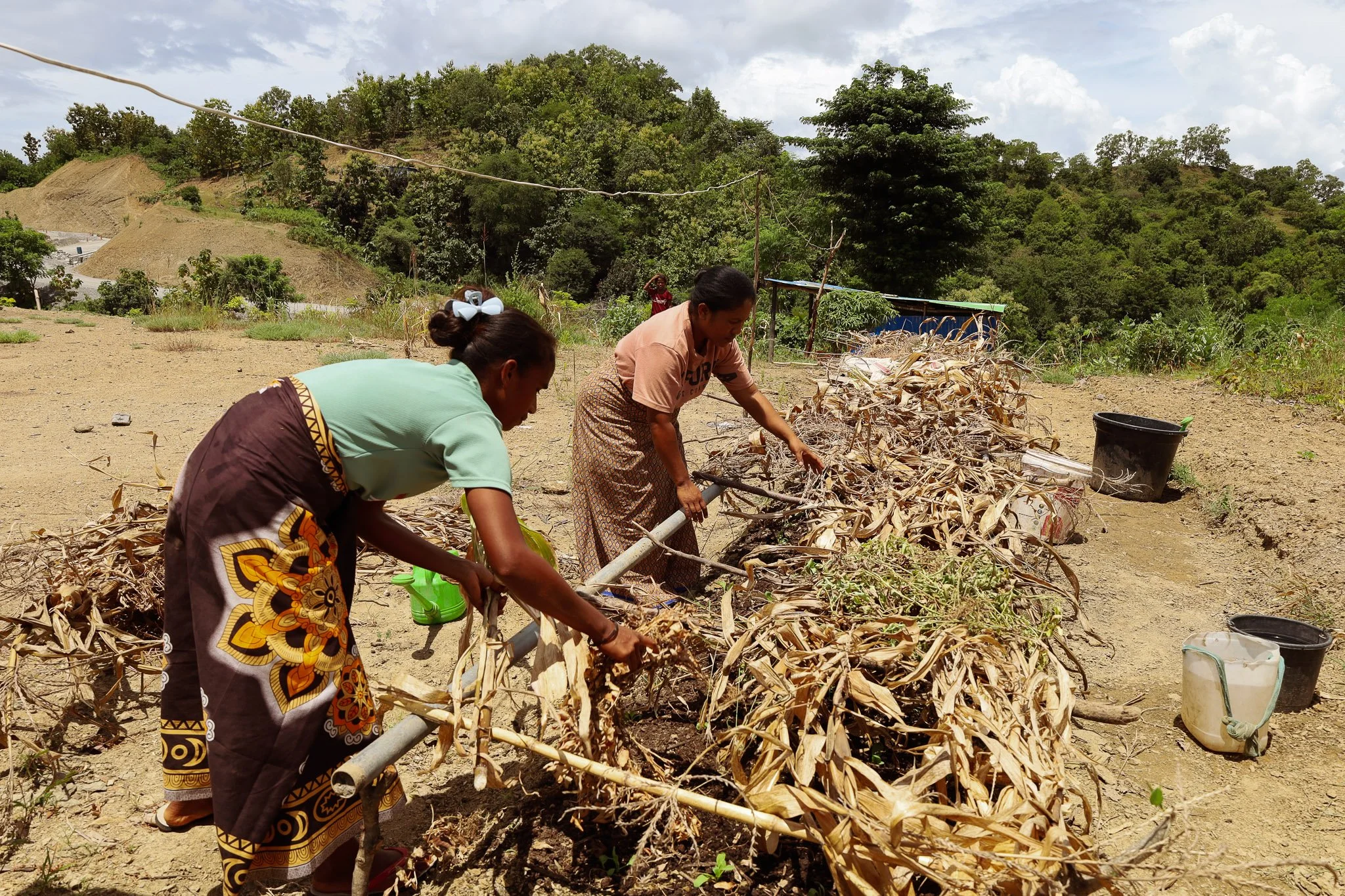
“Now we can build washing areas and grow vegetables.” Juliana Simau describes how water close to home is helping families in Oe-Cusse grow their own food and reduce spending. IMAGE: Aderito do Rosario da Cunha Mambares/Oxfam in Timor-Leste
That reality began to change in 2023, when a community-led water initiative was introduced as part of the Disaster Ready project with technical support from Assosiasaun Futuru Foinsae ba Sustentabilidade (A-FFOS). Through this effort, water was successfully channelled closer to people’s homes using water storage tanks, benefiting 22 households, grouped into five shared distribution points. Today, the transformation is visible and deeply felt across the community. “Before, we struggled so much to get water. We only carried two jerry cans, and that was already enough because the journey was exhausting,” says Anita Sufa, a community member. Having water close to home has significantly reduced both the physical and social burdens. “Now, water is close to our homes. We feel safe, and our lives are much easier.” Juliana Simau, another community member who benefits from the initiative, highlights the shift, “Now we can build washing areas and grow vegetables. We no longer need to spend much money buying food because we grow our own.”
Highlighting the integrated approach taken as part of this project, environmental conservation has now become a priority. Community members have planted trees such as mahogany, sandalwood, and fruit trees around water sources to protect and sustain the watershed. These efforts not only safeguard the water supply but also contribute to climate resilience and biodiversity as a disaster readiness preparation, highlighting the integrated approach taken. Gender roles within the community are gradually shifting as well. Men and women now work together more closely to support land preparation, tree planting, conservation, and water management. This collaboration has strengthened social cohesion and enabled women to take on more visible roles in community development. Perhaps the most profound change is time. What once took hours of walking and carrying water is now replaced with productive activities. Women and families can invest their time in gardening, caring for their homes, and engaging in community initiatives such as Disaster Readiness. “Before, we spent hours walking to fetch water, Now, we can use that time to do other things” says Juliana. “
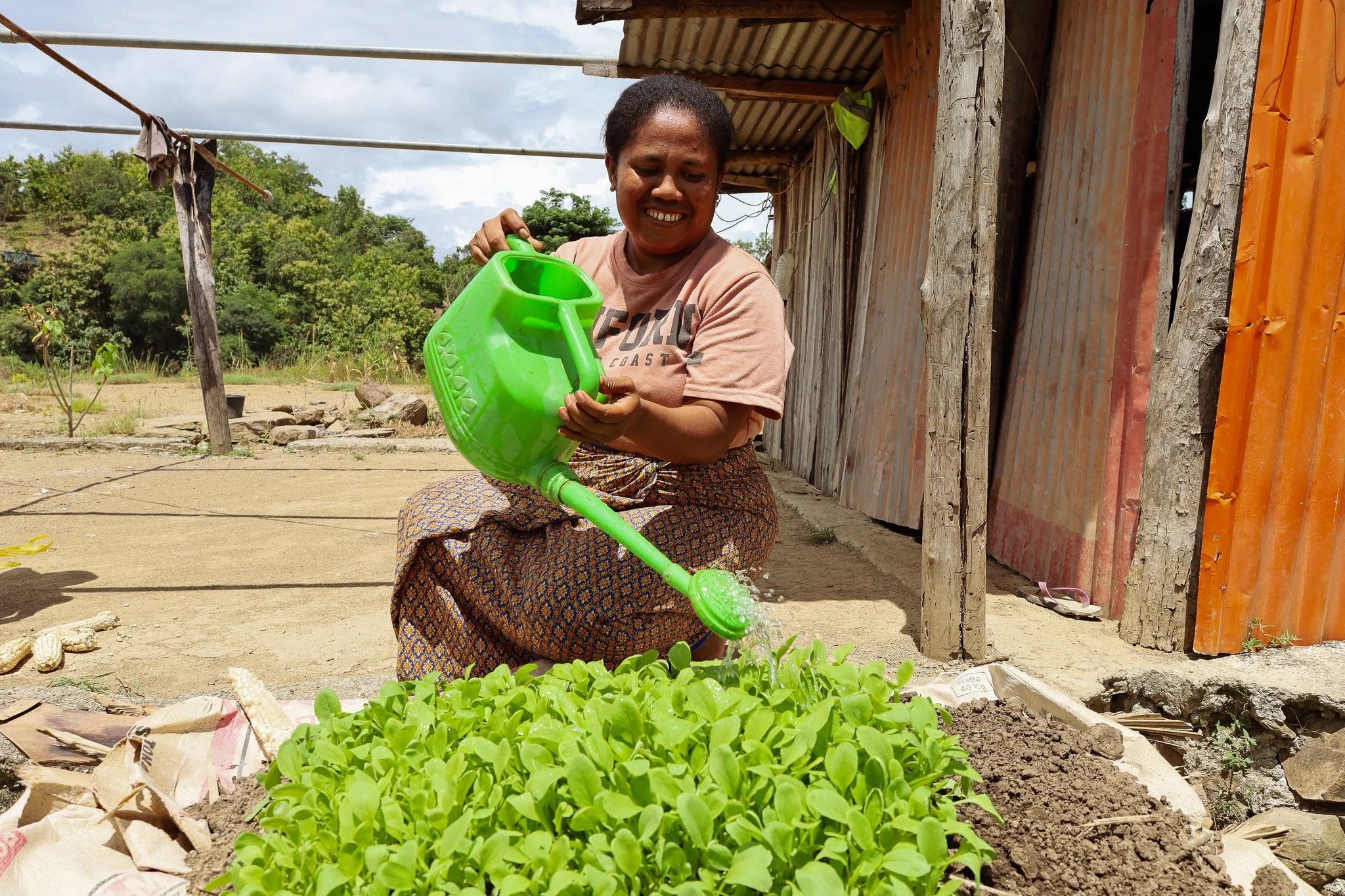
Growing food and protecting water sources go hand in hand in Oe-Cusse. Families are establishing vegetable gardens near their homes and planting trees around water sources to help sustain their shared supply. IMAGE: Aderito do Rosario da Cunha Mambares/Oxfam in Timor-Leste
With reliable water access, households have started small-scale gardening near their homes. Crops like kangkung (water spinach) and other vegetables are now grown. While most of the produce is consumed within the family, surplus harvests are sometimes sold, contributing to household income and food security. The initiative has also strengthened community cooperation and ownership. The 22 households contribute $2 each month, building a shared fund that currently totals $227.25 to maintain and improve the water system. This collective approach ensures sustainability and preparedness for future needs, such as expanding the water reservoir as demand increases and carrying out maintenance. Importantly, clear rules have been established to manage access and ensure fairness. New users who wish to connect to the system contribute financially, while a local facility management group (GMF) oversees distribution schedules and system maintenance. This structured governance has fostered accountability and long-term resilience.
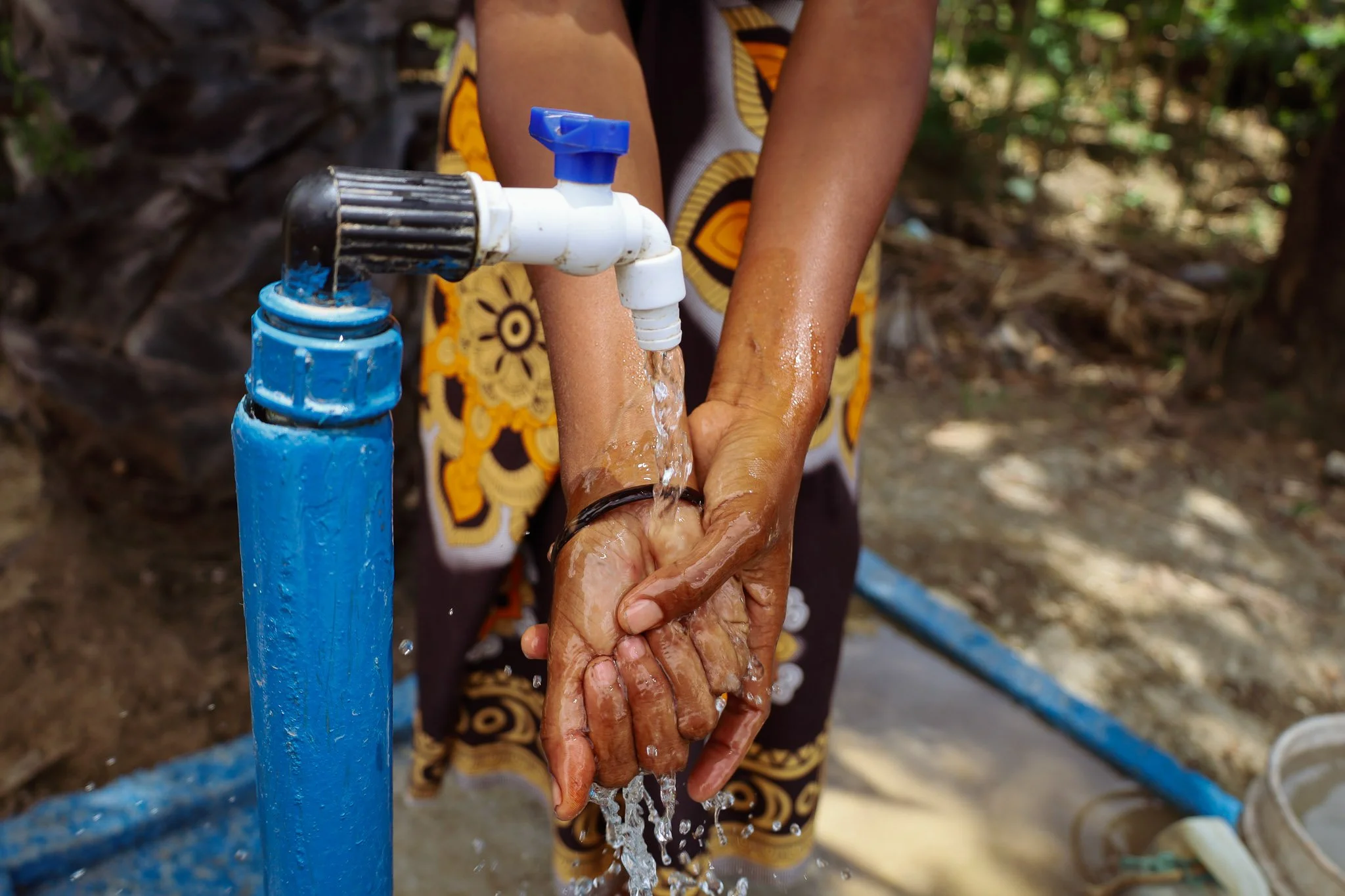
A community-led water system brings water closer to 22 households in Oe-Cusse, Timor-Leste. Supported through Disaster READY, the initiative uses storage tanks and five shared distribution points to improve access. IMAGE: Aderito do Rosario da Cunha Mambares/Oxfam in Timor-Leste
This initiative, supported through the Australian Humanitarian Partnership (AHP) Disaster READY project, is implemented by Oxfam in Timor-Leste in partnership with A-FFOS, with the support of the Australian Government, to improve access to safe water, strengthen resilience, and enhance the dignity and well-being of families in Oe-Cusse.