

Stitching together a stable future through the beauty of handicrafts
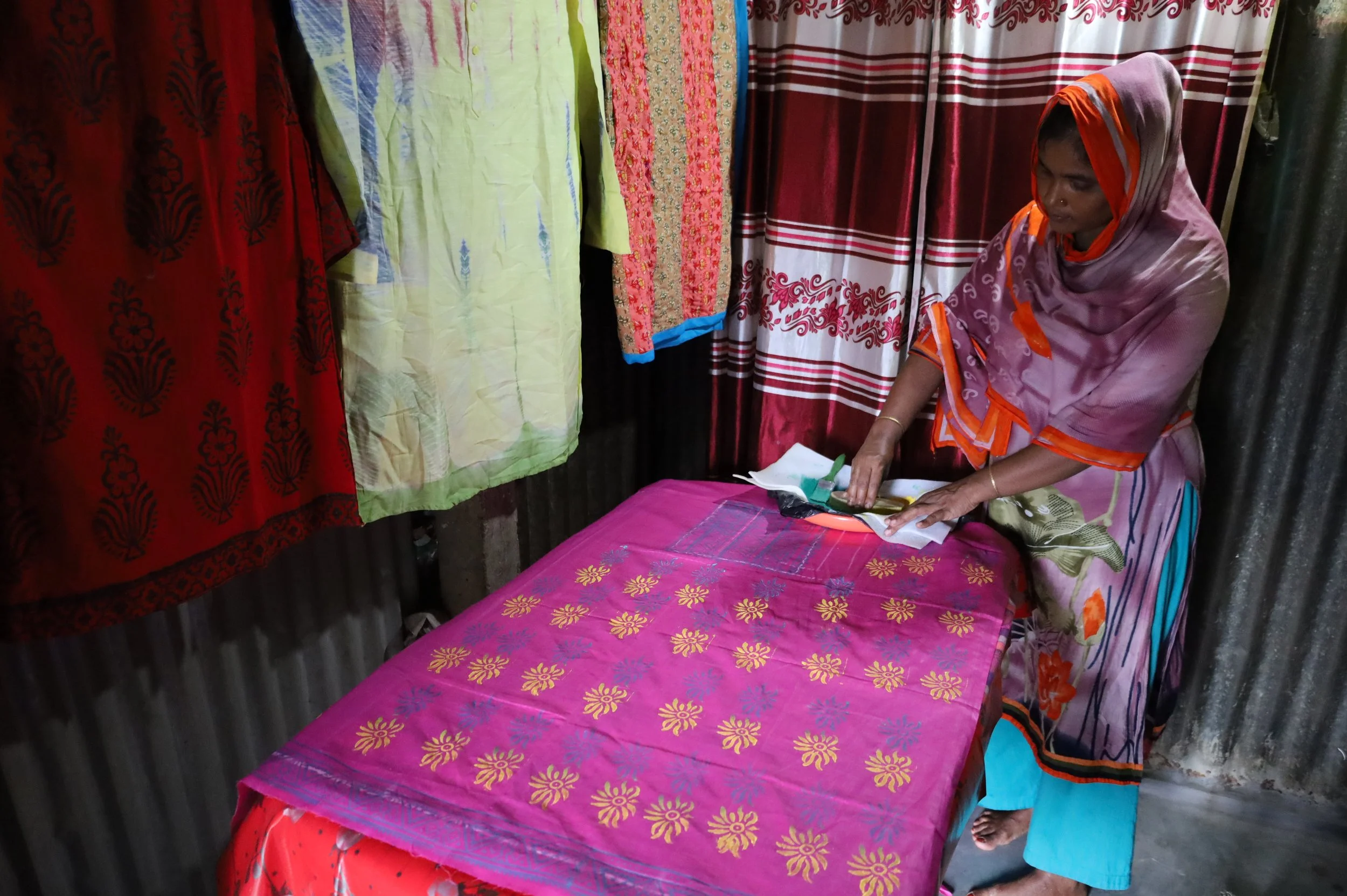
Above: A skill development program has helped Kulsuma provide an income for her family, who have endured many hardships. Photo: Mutasim Billah/Oxfam
Kulsuma Akhtar, a 28-year-old living in a host community in Cox’s Bazar, Bangladesh, embodies the strength and resilience of many women. Born to a farmer with limited means, Kulsuma married her husband Noor, a day labourer, in 2008. Despite their financial constraints, the couple found joy in each other and, three years later, in the birth of their son.
However, their happiness was overshadowed by struggles. Two years later, rising family tensions led to Kulsuma and Noor being forced out of their home. With nowhere else to go and no family support, they had to rent a modest house, which put a burden on their already limited income. As living costs increased and Noor’s income shrank due to labour competition from the incoming Rohingya refugee community, their hardship deepened. In July 2017, they welcomed their second son, yet their joy was tempered by the weight of financial pressures.
Kulsuma made a bold decision to secure the family’s finances. She sold her jewellery and purchased a small house through the Rasullabad village shelter scheme, using the remaining funds to start a small business. Sadly, the venture failed, leaving them in deeper financial strain. Matters worsened when Noor fell suddenly ill with a mental health condition, leaving Kulsuma to shoulder both her family’s emotional and financial burden.
Desperate to support her family, Kulsuma began working as a nanny to fund Noor’s medical expenses and keep her household afloat.
In October 2023 that she came across a skill development program on handicrafts, organised by Mukti Cox's Bazar through the Australian Humanitarian Partnership response in Bangladesh, which is supporting both host communities and refugees. Driven by a desire to reshape her future, Kulsuma completed a six-day training on nakshi katha (Bengali embroidery), block batik (fabric printing), and sewing. With a small startup kit from the program, she began creating intricate embroidery and vibrant batik designs, quickly gaining appreciation from her neighbours.
Thanks to her newfound skills and determination, Kulsuma gradually increased her earnings, easing her family's financial worries. She has since diversified her income by raising chickens and cultivating vegetables, drawing inspiration from others in the program. Together, these activities now bring her a steady income of BDT 4,000-5,000 (AUD 50-60) monthly, supporting her household’s needs and paving the way for a brighter future.
Kulsuma’s journey stands as a testament to resilience and the power of community support.
“Despite the many hardships, the skill development program from this project gave me a new lease on life,” Kulsuma reflects. “It’s helping me build a more stable future for my family.”
This activity was implemented by Mukti Cox’s Bazar and Oxfam with Australian Government support through the Australian Humanitarian Partnership. The activities are part of the CARE-led consortium response with Oxfam and Plan International.