

Papua New Guinea is in the grip of a severe El Niño-driven drought. The Government declared a national humanitarian emergency on 7 October, and more than 5.5 million people are affected, exposed or at high risk. FAO anticipates the country’s most severe El Niño event since 1950, with impacts peaking in October and November 2026 and persisting until August 2027. Morobe and Western Province have been classified as areas of extreme drought severity, and water shortages are already disrupting essential services in other project areas. Rivers, creeks and ponds are drying, shallow wells are shrinking, and water storage at schools and health facilities is depleted or critically low. This threatens safe drinking water, health services, school attendance, food security and protection, with the heaviest burden falling on women and girls, who are primarily responsible for collecting household water.
AHP Response
With support from the Australian Government through the AHP, World Vision is targeting the most drought-affected communities in Delta Fly District and South Fly District -- chosen for their urgent water needs, community vulnerability and World Vision’s presence and ready-to-deploy drilling and desalination equipment, building on the DFAT-funded Western Province Partnership and aligning with the Western Province El Niño Response Plan 2026–2027. The response will improve access to safe water for 1,550 households (9,300 people) through three approaches: household watertreatment and storage for river-side communities; a desalination unit deployed for 3 months in a sea-side community; and installation, repair or upgrading of 7 borehole systems for in-land communities. Gender-balanced, disability-inclusive WASH committees and community members will be trained to manage water safely and maintain systems. Households most affected by drought and lacking adequate water, such as female-headed households and those with people with disability, will be prioritised, and institutional sites will be selected in consultation with authorities.
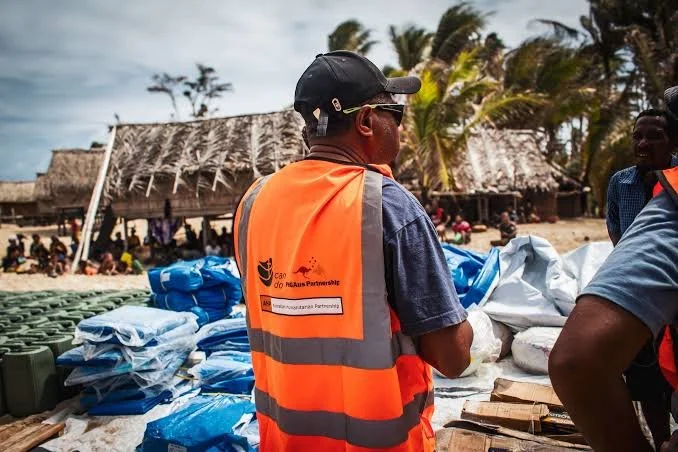
Photo: Leila Parina/CAN DO
CAN DO‘s response will target communities in the greatest risk of harm from water shortages, including people affected by disruption to hospital services. This includes hospital inpatients (particularly pregnant women, sick children and older people); women and girls (who undertake most water collection); people with disability; and socially isolated groups (particularly households excluded from church or tribe networks).Teams will be rehabilitating or extending existing water supply systems and drilling new boreholes. Water quality, pumping requirements and operating costs will be assessed, with alternatives identified if needed. Work will be done by previously contracted and trusted organisations who demonstrate the capacity to start immediately. Planning will use benchmarked water requirements for healthcare, education and communities, with extra storage for low-yield, high-use periods, and sources will be protected at collection points to limit contamination.
The AHP El Niño Response will conclude at the end of April, 2027.